REVIEW · SEA LIFE KANSAS CITY
Kansas City: SEA LIFE Kansas City Aquarium General Admission
Book on GetYourGuide →Operated by SEA LIFE Kansas City Aquarium · Bookable on GetYourGuide
Some places feel like a quick stop. This one feels like a full hour of wonder. SEA LIFE Kansas City mixes 11 interactive zones with a classic crowd-pleaser, the 180-degree Ocean Tunnel, so the route keeps moving instead of stalling.
What I like most is how much you can do without special training: you’ll get face-to-fin moments in multiple exhibits and there’s a real focus on what animals eat, how they move, and how they live. I also appreciate the hands-on style of the layout, especially the rockpool-style areas where you can engage in a more interactive way.
The main thing to consider is that the aquarium is relatively compact. If you’re expecting a mega-aquarium day, you may finish faster than you planned and feel the $20 price more than some bigger-name options.
In This Review
- Key highlights you’ll actually care about
- Ocean Tunnel and the 11-Zone Route That Keeps Moving
- Freshwater Exhibit and Harbor Viewing: Face-To-Fin Comes Early
- Rockpool Touch Exhibit: Chocolate Chip Sea Stars and More
- Shoaling, Seahorses, and Stingray Bay: Watching Behavior Instead of Just Color
- Tropical Ocean Tunnel, Coral Reef Color, and Jellies in Motion
- Parking, Masks, and a Few Rules That Affect Your Day
- Price and Value: What $20 Buys You in a Smaller Aquarium
- Who This Is Best For (and Who Might Want a Bigger Place)
- Before You Go: Small Tactics That Improve Your Experience
- Should You Book SEA LIFE Kansas City?
- FAQ
- How much is general admission to SEA LIFE Kansas City?
- How long do you need for SEA LIFE Kansas City?
- Where is SEA LIFE Kansas City located?
- Is parking included with admission?
- Are masks required?
- Can I bring food and drinks?
- Are there rules for children?
- Is the aquarium wheelchair accessible?
Key highlights you’ll actually care about
- 180-degree Ocean Tunnel: a big “wow” moment that feels like you’re walking through the water
- 11 interactive zones: plenty to keep kids busy and adults engaged between photo stops
- Face-to-fin freshwater and harbor areas: local-species viewing plus the thrill of spotting babies like stingrays
- Rockpool touch exhibit: a rare hands-on-style add-on for families (with approved creatures)
- Stingray Bay and seahorses: watch how they feed and move, not just how they look
- Ocean tunnel to jellies to coral reef: the exhibits cover different animal groups without feeling random
Ocean Tunnel and the 11-Zone Route That Keeps Moving
SEA LIFE Kansas City is built around a simple idea: keep you flowing from one area to the next. With 11 interactive zones, the experience doesn’t rely on one huge hall. Instead, it uses lots of smaller habitats, each with a clear theme, so you can stop, watch, and move on without feeling lost.
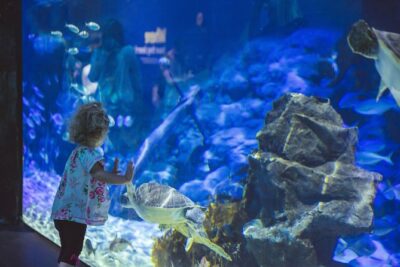
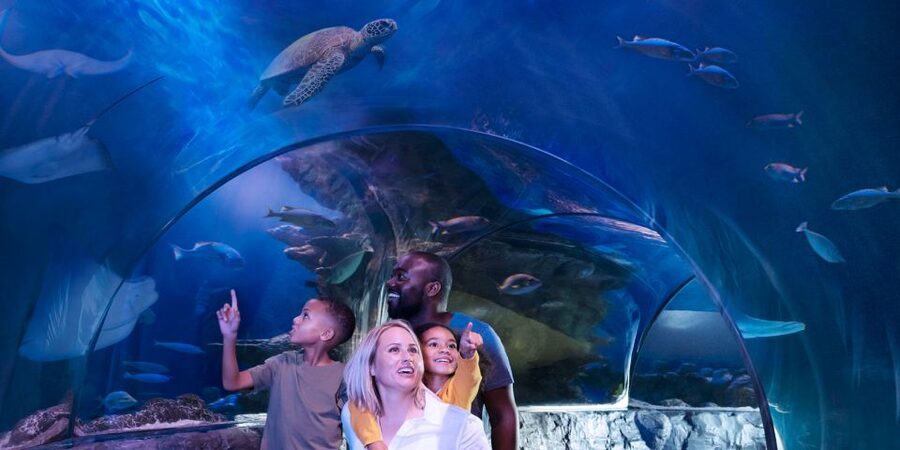
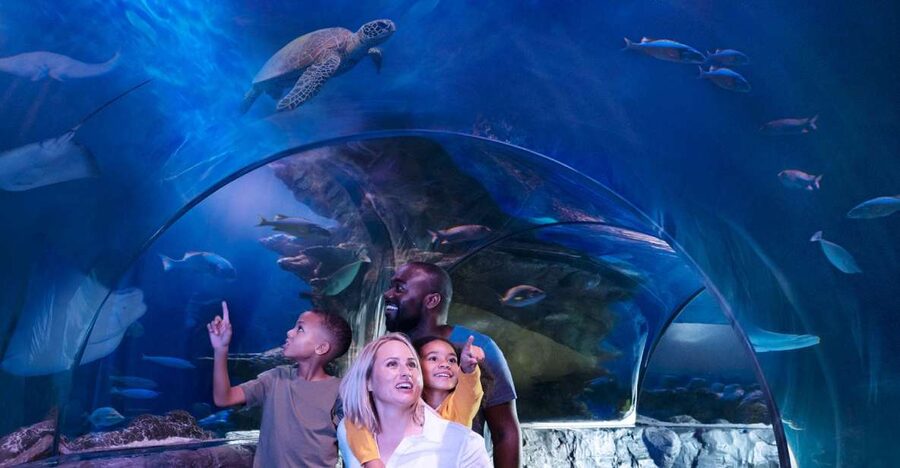
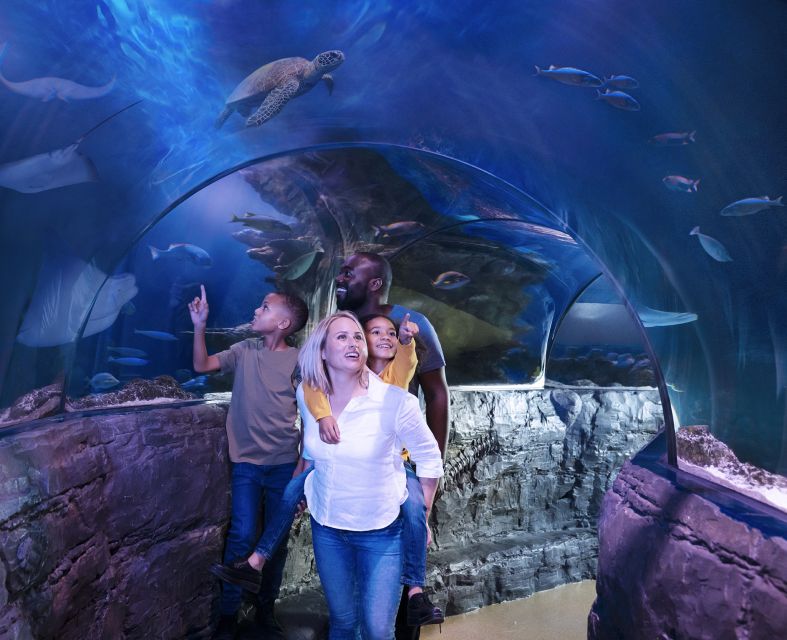
The star moment is the 180-degree Ocean Tunnel, where you’ll stand inside an underwater corridor and look outward as fish swim around you. This is the kind of exhibit that works for everyone. Kids get excited because it feels dramatic. Adults tend to like it because it’s a true “take a breath and look around” pause in the middle of a self-guided walk.
One practical note: the experience uses directional markings, which helps when you’re traveling with children or you just want to get your bearings fast. It also means you’re less likely to waste time backtracking, even though the overall building is smaller than the biggest aquariums.
If you’re bringing a stroller, plan on spending time navigating crowds in the popular viewing moments, like the tunnel and the areas with touch or feeding-style viewing. The route is approachable, but it is still an attraction in a downtown area.
Freshwater Exhibit and Harbor Viewing: Face-To-Fin Comes Early
If you want your first “wow” to happen quickly, start with the freshwater areas. The Freshwater Exhibit is designed for nose-to-nose viewing with local species from streams, rivers, and lakes. This matters because it shifts the aquarium story away from only ocean animals. You’ll see how diverse freshwater life can be, and it’s easier for kids to connect when the animals come from environments they might recognize back home.
Then the experience moves toward the Harbor Exhibit, where you’re encouraged to spot baby stingrays. That small detail is exactly why this place works: it gives you a goal while you’re looking, not just a passive “watch the tank” moment. When you’re with kids, tasks like spotting baby rays turn the exhibit into a game.
The harbor and freshwater combo also sets up an important learning rhythm. You go from local to marine, from “here’s what lives where” to “here’s what ocean animals do.” That’s useful if you want your family to walk out with more than pictures.
Drawback to keep in mind: if you don’t like searching through exhibits for hidden animals, you may spend time looking and not always feel like you found the exact moment you hoped for. Still, the viewing is frequent and the tanks are designed for continuous watching.
Rockpool Touch Exhibit: Chocolate Chip Sea Stars and More
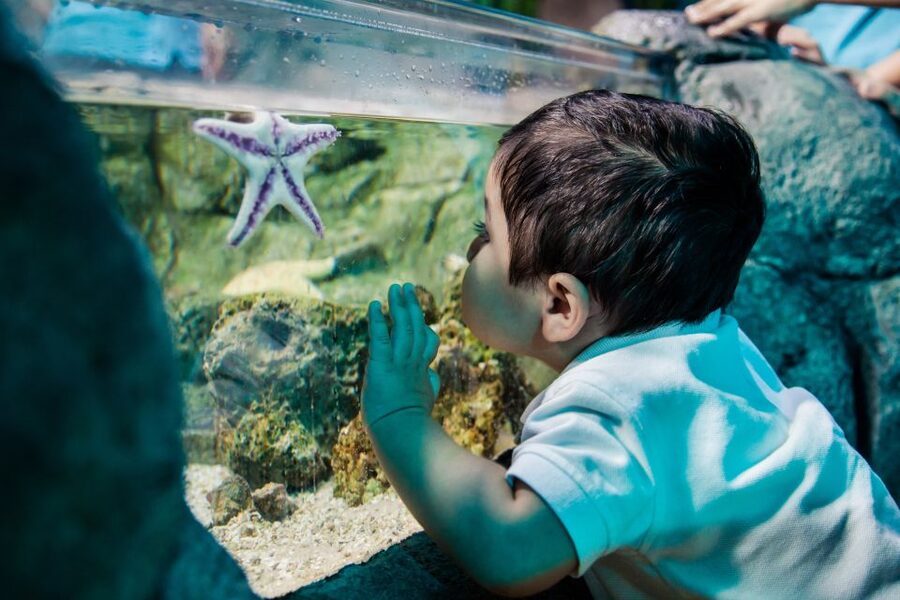
One of the most memorable parts is the Rockpool Exhibit, where the experience includes a touch-style interaction with certain creatures. You’ll see examples like a chocolate chip sea star, pencil sea urchins, cowrie snails, and other rockpool animals.
This is a big deal for families because touch (when offered appropriately) changes the way kids remember an attraction. Instead of only seeing textures through glass, they learn that these animals have real shape, real movement, and a role in the ecosystem. Adults benefit too, because it turns “cool aquarium” into “I understand what I’m looking at.”
A practical caution: the touch area is still an aquarium rule environment. The attraction doesn’t allow food and drinks, and it restricts luggage or large bags. So come prepared with a light load. If you’re traveling with kids, plan for hand hygiene afterward and keep wipes handy in your daypack.
Also note the experience is directional and can include reminders about distancing when needed. That’s helpful when you’re waiting around the rockpool zone, since touch exhibits naturally create a crowd.
Shoaling, Seahorses, and Stingray Bay: Watching Behavior Instead of Just Color
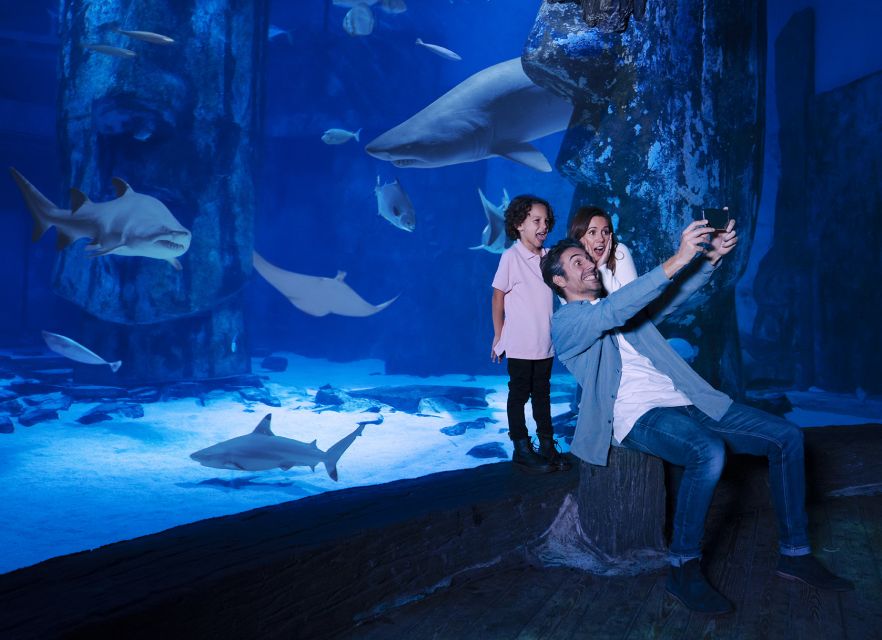
After you’ve built the “sea life” context, the aquarium shifts toward animal behavior. At the Shoaling Exhibit, you can watch hundreds of lookdowns swim around you. This is one of those experiences where the tank becomes a moving pattern. Kids tend to get the excitement right away because the fish are active and the group movement is easy to notice.
Next is the Seahorse Exhibit, where the focus is on close-up viewing and feeding behavior. Seahorses grip seagrass with their curly tails, and they also suck up tiny shrimp with straw-like snouts. That level of specific detail is the difference between a tank that’s pretty and a tank that teaches.
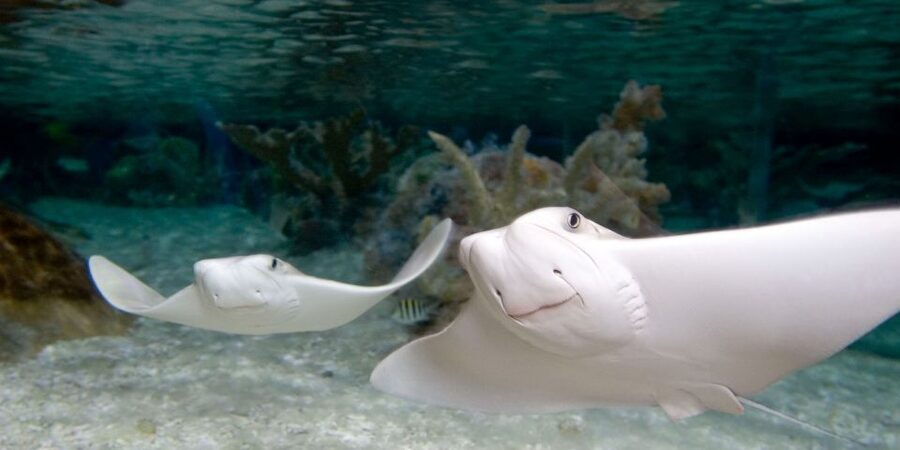
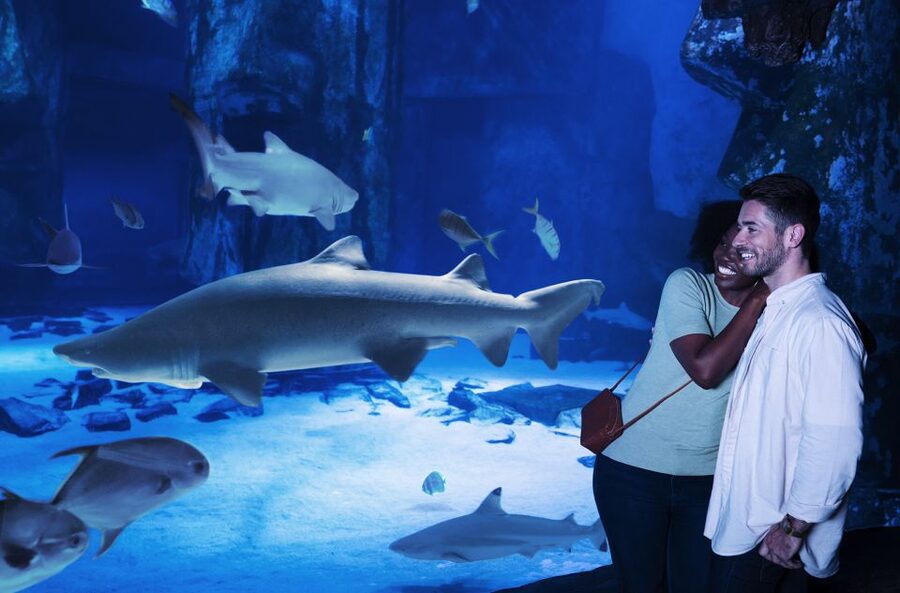
Then comes Stingray Bay, which is built around the idea that rays have personality. The exhibit is described as having rays with a happy, smile-like look, and that’s exactly what makes it popular. Rays also tend to be easy for kids to track because they glide in a way that feels calm and predictable.
If you’re deciding where to spend time, give yourself a little extra at stingray and seahorse moments. The best viewing often comes when you’re patient and watching how the animals move, not just when you first arrive at the viewing window.
A consideration: if you’re visiting during peak hours and you find a wall of bodies at the front, you might need to wait for openings. The attraction is designed for flow, but these are the exhibits that draw attention first.
Tropical Ocean Tunnel, Coral Reef Color, and Jellies in Motion
After the earlier freshwater-to-harbor sequence, you’ll reach the Tropical Ocean Exhibit, which includes the underwater experience of the Ocean Tunnel again as part of the “stroll under the sea” feeling. The tunnel is a highlight here because it turns the aquarium from “rooms with tanks” into a single central visual moment.
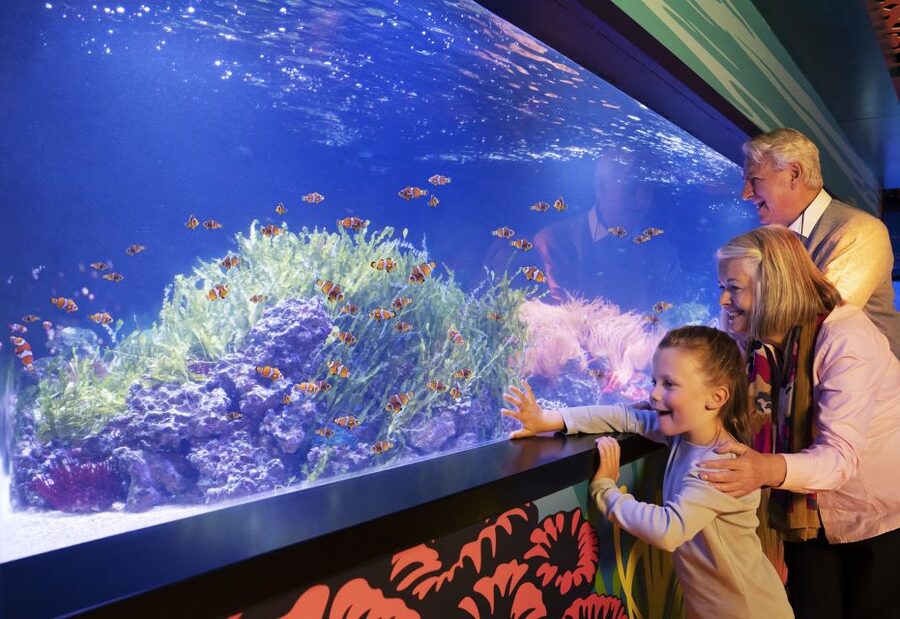
Then you’ll move into the Coral Reef Exhibit, where the show is color and structure. This is where you’ll likely slow down for photos even if you’re not a photographer, because the reef look tends to create instant visual appeal. Adults usually enjoy this part when they shift from thinking of it as decoration to noticing how reef habitats create places for animals to live.
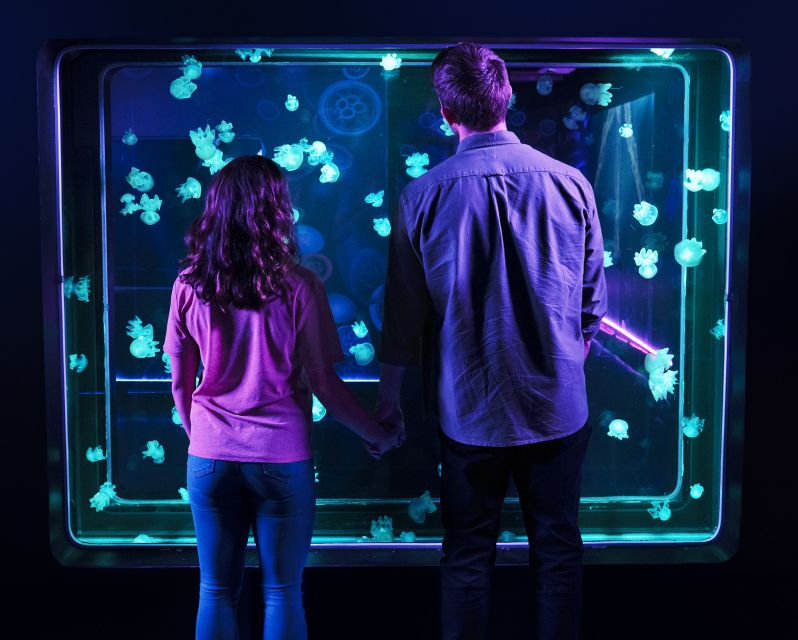
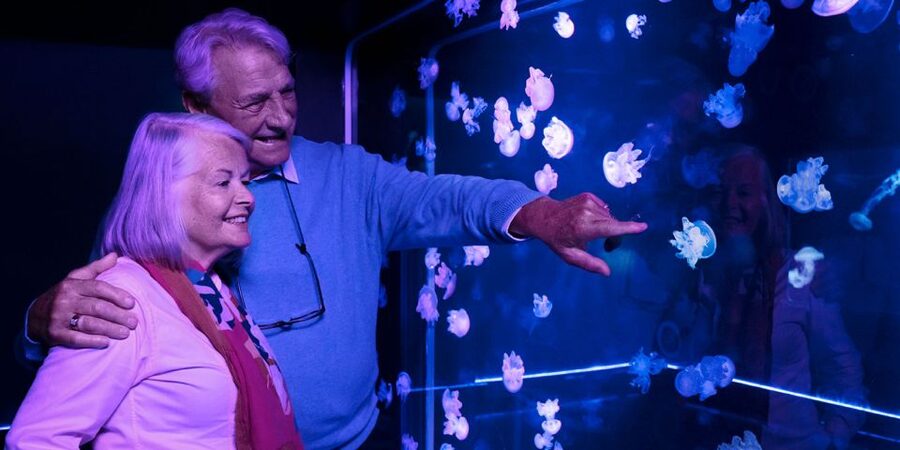
Finally, the Jellies Exhibit gives you movement rather than just appearance. Watching jellies “dance” through the water is a great reset after stingrays and schooling fish. It’s also calmer, which is helpful when kids are getting tired.
If you want your day to feel smoother, this is the part of the route where I’d focus on pacing. Don’t rush coral reef and jellies if you notice kids losing steam. These exhibits are often easier to enjoy when you take a slower look rather than sprinting for the next stop.
Parking, Masks, and a Few Rules That Affect Your Day
SEA LIFE Kansas City sits in the Crown Center District at 2475 Grand Blvd., Kansas City, MO 64108. It’s right by the Crown Center Plaza, and that location is a plus if you’re also planning other downtown sights.
Parking is straightforward. The admission includes validated free parking inside the Crown Center Parking Garage next door. That single included perk can make a noticeable difference in overall cost, especially for families who want convenience without spending time circling.
A couple of rules can change your experience if you don’t plan ahead:
- Face masks or protective coverings are required for all guests.
- Food and drinks aren’t allowed inside.
- Luggage or large bags aren’t allowed.
- Unaccompanied minors aren’t allowed.
- Late entry isn’t permitted.
There are also child supervision rules: children 16 and under must be accompanied by an adult 18 and above. Children 2 and under are free with paid adult admission. If you’re traveling as a mixed-age group, these details matter for who needs to stay with whom.
Wheelchair accessibility is mentioned, so if you’re using mobility support, you should be able to get around the attraction.
My practical advice: go light on gear, wear comfortable shoes, and plan for the mask requirement from the start. You’ll enjoy the exhibits more when you’re not managing logistics while also trying to keep kids engaged.
Price and Value: What $20 Buys You in a Smaller Aquarium
At about $20 per person for general admission (with a 1-day visit), you’re paying for a mix of animal variety and hands-on-style learning. The value question comes down to your expectations.
On one hand, you’re getting:
- 11 interactive zones
- the signature Ocean Tunnel
- multiple animal types you can actually observe closely
- touch interaction in the rockpool area
- and free validated parking, which helps offset the day’s total cost
On the other hand, this aquarium is smaller than some of the huge, famous name-brand facilities. It can feel quick if you like long, slow museum-style exhibits. I’d treat it as a smart half-day or family outing that you can pair with other Crown Center or downtown plans.
If you’re the type of traveler who loves to read every sign and linger in each tank, give yourself more time than you think you need. If your group is more “in, watch, go,” you’ll probably feel satisfied, but you might not feel like you got a full day’s worth of content.
The bottom line: the price makes more sense when you see it as a family-friendly science stop with big hit exhibits like the tunnel and stingrays, not as a giant day-long aquarium marathon.
Who This Is Best For (and Who Might Want a Bigger Place)
This is a strong fit for families with kids of many ages. The attraction explicitly focuses on interactive zones designed so children can participate without needing a guided tour. Kids generally like the stingray moments, the jellies, and the tunnel, because they’re easy to understand and hard to ignore.
It also works for adults traveling with kids because the aquarium doesn’t treat adults as only spectators. The exhibits are organized around animal behavior (like how seahorses feed) and animal relationships to their environments (freshwater vs. marine), which is more interesting than color-only viewing.
If you’re a hardcore aquarium lover who expects massive galleries and long educational programming, you might find the footprint too compact for what you prefer. In that case, you may want to pair this with another activity, or choose a larger aquarium on a separate day.
Before You Go: Small Tactics That Improve Your Experience
Here are a few tactics that keep the day smoother, especially with children:
- Plan to spend extra time at stingray and seahorse areas, since those are usually the most crowd-drawing.
- If your kids get restless, use the route goals (like spotting baby stingrays) to turn the walk into a game.
- Go in with the understanding that it’s a self-guided flow with directional markings, not a timed show schedule.
- Keep your bag light because luggage and large bags aren’t allowed.
Also, since late entry isn’t permitted, aim to arrive with a little buffer. That buffer helps if you’re dealing with parking logistics and mask check moments.
Should You Book SEA LIFE Kansas City?
Book it if you want a family-friendly aquarium day in downtown Kansas City where the highlights happen quickly and the format keeps moving. The Ocean Tunnel plus hands-on-style rockpool viewing and the stingray-focused exhibits are the kind of combo that makes kids happy and helps adults feel like it’s more than just staring at tanks.
Skip it or pair it carefully if you’re expecting a massive aquarium with lots of deep, slow wandering. At this size, it can feel short for the price if your goal is an all-day, museum-length experience.
If you’re visiting Crown Center anyway, this is an easy add-on that fits well. If it’s your only destination for the day, I’d still consider it worthwhile, just go in with the right expectation: a fun, structured aquarium outing with big visual moments and animal behavior you can actually watch.
FAQ
How much is general admission to SEA LIFE Kansas City?
General admission is listed at about $20 per person.
How long do you need for SEA LIFE Kansas City?
The activity is described as lasting 1 day, and you can move through the 11 interactive zones at your own pace.
Where is SEA LIFE Kansas City located?
It’s at 2475 Grand Blvd., Kansas City, MO 64108, in the Crown Center District.
Is parking included with admission?
Yes. Your admission includes validated free parking inside the Crown Center Parking Garage.
Are masks required?
Yes. Face masks or protective coverings are required for all guests.
Can I bring food and drinks?
No. Food and drinks are not allowed.
Are there rules for children?
Yes. Children aged 16 and under must be accompanied by an adult aged 18 or above. Children 2 and under are free with paid adult admission.
Is the aquarium wheelchair accessible?
Yes, SEA LIFE Kansas City is listed as wheelchair accessible.