REVIEW · ORLANDO
SEA LIFE Orlando Aquarium Admission Ticket at ICON Park
Book on Viator →Operated by Merlin Entertainments Orlando · Bookable on Viator
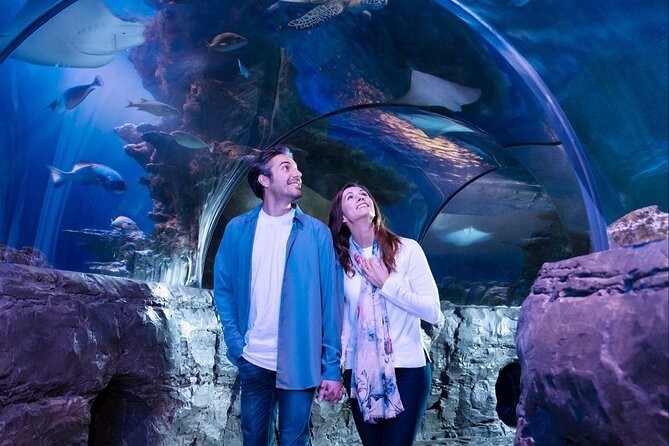
A glass tunnel with sharks is a win for any age. At SEA LIFE Orlando Aquarium, you get a self-paced walk through themed habitats that stretch from subtropical wetlands to ocean shores, with feeding shows and hands-on-style fun sprinkled throughout. I love how the exhibits are organized for real wandering, not a rushed lineup, and I also like that it’s built to keep kids interested without boring the adults.
The biggest drawback is that the aquarium is on the smaller side compared with some giant U.S. aquariums, and a few interactive areas can be limited if they’re paused during demonstrations. If you’re expecting lots of touch time or wall-to-wall mega tanks, you may find it runs more like a focused highlights loop.
In This Review
- Key takeaways before you go
- Entering ICON Park without wasting time
- From wetlands to the Gulf: how the aquarium route really works
- Pacific octopus, seahorse feeding, and jellyfish that behave like tides
- Sharks and stingrays: the 360-degree tunnel moment
- Feedings and demos: when education is part of the show
- Hands-on time (and why it can be limited)
- Upgrading at ICON Park: Madame Tussauds and The Orlando Eye
- Price and value: what $31.94 buys you in real time
- Tickets, photos, and VR add-ons: things to watch before you pay
- Should you book SEA LIFE Orlando Aquarium admission?
- FAQ
- How long does SEA LIFE Orlando Aquarium admission take?
- What’s included with the SEA LIFE Orlando ticket?
- Do I need to buy a mobile ticket?
- Can I upgrade to visit other ICON Park attractions?
- Are shark and ray feedings included?
- Is digital photo coverage included?
- Is there VR at SEA LIFE Orlando?
- What’s the cancellation and weather policy?
Key takeaways before you go
- Mobile ticket entry: you can use a phone ticket for faster entry and save time by keeping your barcode handy.
- A full mini-journey of habitats: wetlands, Florida Keys-style scenery, and Gulf-shore areas in one route.
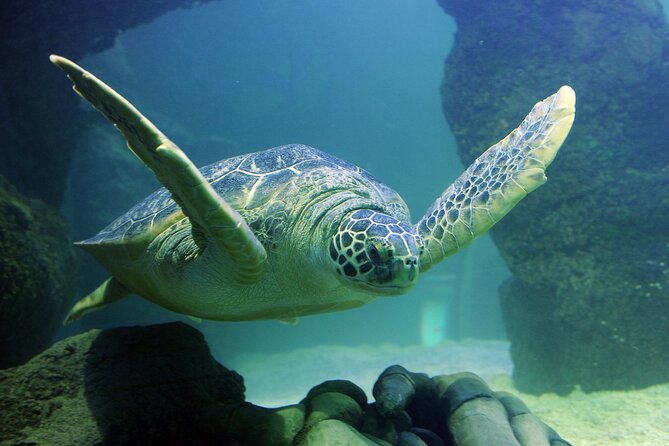
- Big, memorable animals: giant Pacific octopus, seahorse feeding, clownfish, sea turtles, and jellyfish in tide-mimicking tanks.
- 360-degree glass tunnel: a shark-and-stingray viewing moment that’s easy to plan around.
- Daily education moments: ray and shark feedings plus other demonstrations help connect the animals to conservation.
- Optional add-ons nearby: Madame Tussauds and/or The Orlando Eye upgrades fit neatly into the ICON Park area.
Entering ICON Park without wasting time
SEA LIFE Orlando sits right inside ICON Park on International Drive, which is the kind of location that works well when you’re juggling naps, snack breaks, and a group with different energy levels. I like that the ticket is mobile, so you aren’t hunting for paper and you can get your day moving fast. If you can, take a screenshot of each barcode on your phone before you head in. It’s a small step that can save you a lot of line-time if anything glitches.
You’re also not locked into a guided path. The experience is self-paced, so you can slow down for the tanks that catch your eye and skip the parts that don’t. That flexibility matters, because even with a scheduled-feeling layout, everyone’s pace is different.
From wetlands to the Gulf: how the aquarium route really works
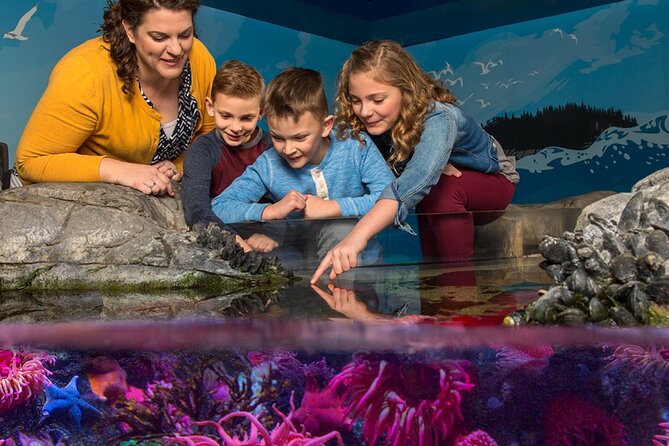
Once inside, you move through a storyline of marine life shaped by Florida’s subtropical environment. The route starts with wetlands and swamps themes (including the Lake Apopka-style zone), then continues into the look and feel of the Florida Keys and sandy shores linked to the Gulf of Mexico. It’s not just decoration. The themes help you remember where the animals are from and what conditions they typically live in.
The aquarium is built around more than 30 displays and about 5,000 creatures, so you’ll have variety as you move. Still, because it’s not a massive sprawling property, I recommend using “slow down, then go” thinking. Spend extra time in the areas with the biggest glass viewing (like the tunnel and major tanks), and you’ll feel like you got your money’s worth even if you finish in closer to the 1–2 hour range.
One practical note: the signage and species identification feel more kid-friendly than museum-grade. If you’re the kind of adult who likes to read every scientific name, you might want a bit more label density. On the other hand, the overall flow is simple, so even first-timers usually feel comfortable finding their way.
Pacific octopus, seahorse feeding, and jellyfish that behave like tides
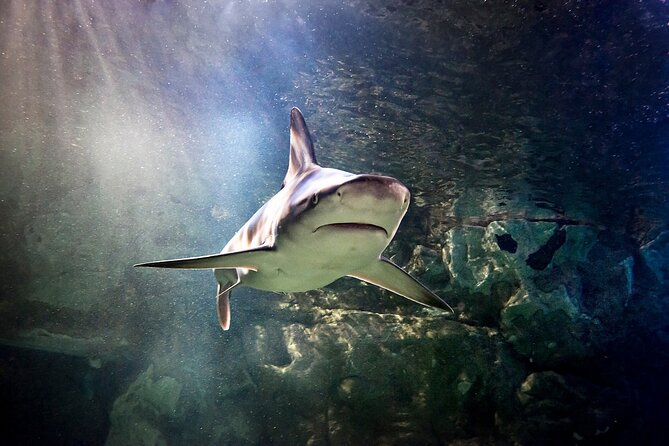
Here’s what I’d put on your mental “don’t miss” list. The giant Pacific octopus is a standout—described as the largest octopus in the world, and it’s exactly the kind of animal that makes people stop walking without planning to. If you want the best chance to actually see it clearly, go in waves: first look is for locating it, second look is for settling in and watching movement.
Next up: seahorses feeding. You can watch seahorses eat small shrimp, and the staff interpretation (including the idea of a male seahorse with babies in its pouch) turns a cute fish moment into a real “wait, that’s how it works” lesson. For many families, that feeding-style content is the moment that makes the whole visit feel worth it, because it’s active and timed.
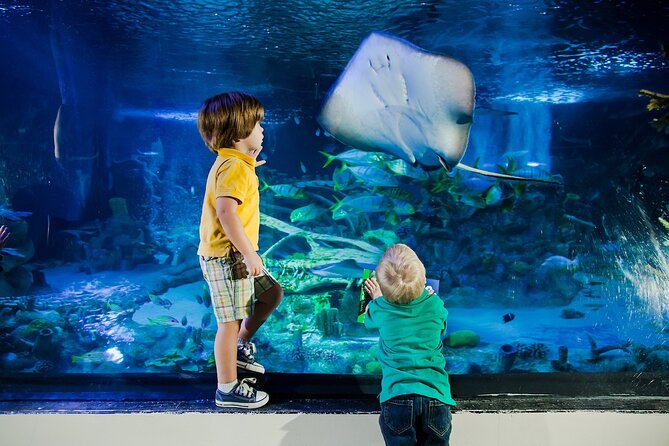
Then there are the jellyfish cylindrical tanks, set up to mimic ocean tides and currents. Instead of a static “look at the jelly,” these tanks help you understand why jellyfish movement looks the way it does in natural water flow. If you have kids who can’t sit still, jellyfish are the compromise: they’re interesting to look at, but you still get motion to keep attention.
Sharks and stingrays: the 360-degree tunnel moment
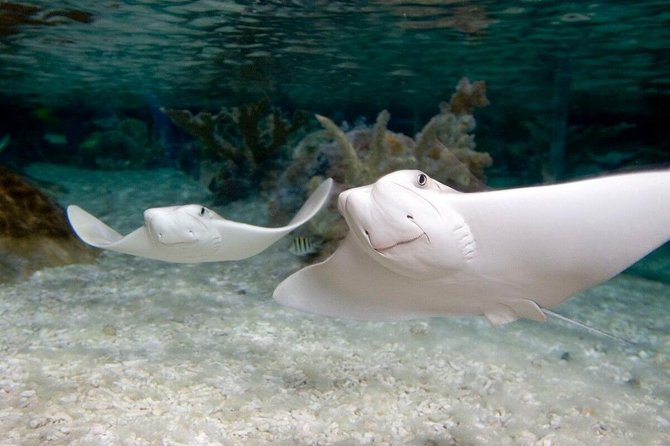
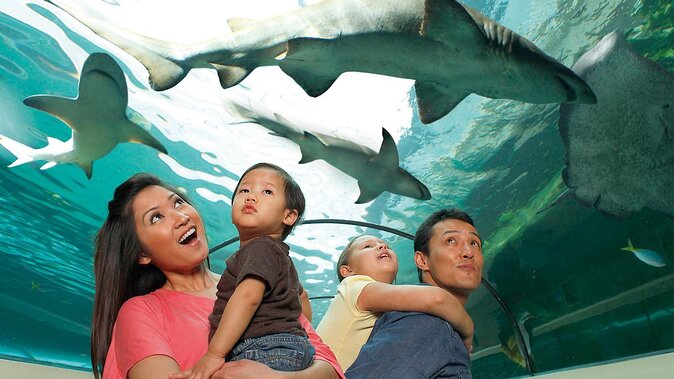
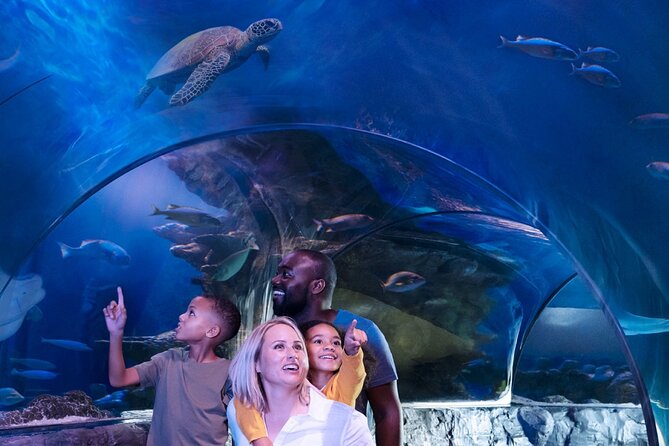
If you like dramatic viewing, the aquarium’s glass tunnel is the key experience. You walk through for a 360-degree view of stingrays and sharks swimming overhead and around you, which changes how you perceive size and movement. This is one of those moments where you’ll want to pause, not speed through, because the effect is the encircling view.
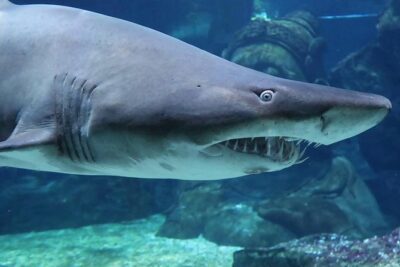
There’s also a tank of blacktip reef sharks, described as coming from tropical coral reefs in the Indian and Pacific oceans. That matters because it adds context to what you’re seeing rather than treating every shark like it’s the same backyard creature. You’ll also see shore-and-tide species like sea urchins, crabs, and others that help fill in the “what’s living where” picture.
For photos: since the tunnel is built for viewing, you can usually find a stable spot and shoot without blocking a screen of people the way you might in a narrow exhibit line. If you’re traveling with a group, this is also a good place to regroup—send one person for the photo angles, then swap.
Feedings and demos: when education is part of the show
The best part of many aquarium visits is the moment you realize it’s not only about looking—it’s about learning a little and leaving with a clearer view of the ocean. SEA LIFE does this with staff-led ray and shark feedings plus other daily educational demonstrations.
I like these moments because they’re not heavy-handed. You’re learning in real time while you can still see the animals behaving normally—feeding patterns, movement, and how the keepers interpret habitat. If you’re visiting with kids, these are also the “attention resets” that break up long viewing with something active.
There’s a clear conservation thread too, including mentions of breeding programs and efforts to support conservation around the world. You don’t need a science background to get the point. You just walk away thinking: these animals aren’t decorations, and the work to protect them is part of the story you saw.
Hands-on time (and why it can be limited)
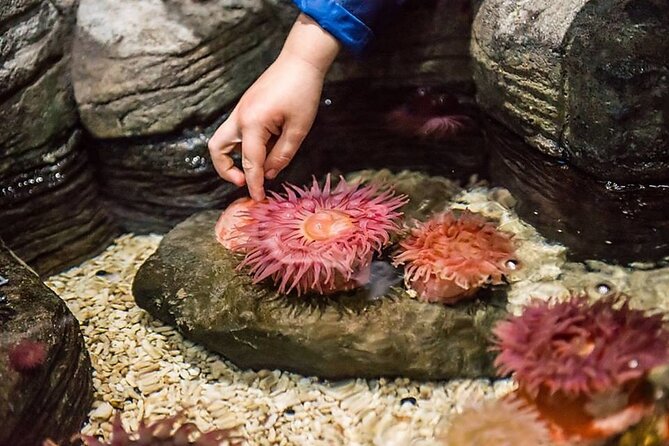
If you’re hoping for lots of touch-based interaction, plan with flexibility. One common disappointment is that the aquarium’s hands-on options can be limited when interaction areas are paused for breaks during the day. That doesn’t mean the aquarium is lacking; it just means your visit timing can affect how much hands-on you get.
My advice: don’t build your expectations around touching. Treat interaction areas as a bonus. If you do want them, aim to check in with staff for what’s happening right now (or soon) and structure your route so you’re not stuck waiting in one spot.
This also explains why some people feel it’s “family focused.” Even when the tanks are fantastic, the emphasis is often on guided family learning moments, not on adult-level behind-the-scenes access. If you want deeper extra experiences, you might find it makes sense to consider paid upgrades offered through the attraction mix.
Upgrading at ICON Park: Madame Tussauds and The Orlando Eye
Your base admission is for SEA LIFE, but the package can expand with additional ICON Park attractions. If you choose an upgrade, you can add Madame Tussauds Orlando and/or The Orlando Eye, with each attraction timed like a practical add-on rather than a full second itinerary.
Madame Tussauds Orlando is described as a face-to-face set of lifelike wax figures across music, film, sports, and history. You can snap photos with famous faces, and there’s even a hands-on option to craft a wax mold of your hand as a personalized keepsake.
The Orlando Eye is a 400-foot observation wheel with air-conditioned capsules. If you like photos, I’d put The Orlando Eye in your evening planning, since it’s especially good at sunset or night. Even if you don’t care about heights, it’s a nice contrast to the indoor aquarium, and it makes the ICON Park area feel like a full half-day outing.
The key value of upgrades is simple: they keep you in one neighborhood. You’re not hopping across town trying to fit unrelated attractions together.
Price and value: what $31.94 buys you in real time
At $31.94 per person, this is priced like a mainstream theme-park-adjacent attraction: not cheap, but also not priced like a once-in-a-lifetime museum. The value depends on how long you spend and what you love.
If you enjoy watching animals closely and you like educational moments, the “more than 30 displays” plus the big feature tanks (octopus, seahorses, jellyfish, sharks, tunnel) can feel like a solid use of time. Since the duration is listed anywhere from 30 minutes to 2 hours 30 minutes, you have room to tailor the value. If you speed through, it can feel short. If you pause for feedings and the tunnel, it tends to feel more complete.
Also remember: the aquarium is described as small-ish by some visitors. That can be good news if you don’t want to walk for hours in a crowd. If you were hoping for a massive mega-aquarium day, you might want to compare your expectations and decide if you want this as a focused stop or a warm-up before bigger Orlando attractions.
One more value angle: mobile tickets and an easy location help reduce “hidden costs” like time and stress. Those don’t show up in the price tag, but they affect your overall satisfaction.
Tickets, photos, and VR add-ons: things to watch before you pay
Your ticket is mobile, and entry is tied to barcodes. Screenshotting them can prevent last-minute friction if you’re standing in a busy area and your signal is weak.
Photos can be a mixed bag, mostly because the camera/memory side of the experience has more steps than people expect. SEA LIFE has a photo process handled by Magic Memories. Digital photos may be included depending on the ticket package or selected options, while physical copies are sold separately by Magic Memories. If you’re picky about costs, pay attention right at the photo prompt so you understand what you’re getting before it turns into a decision at the end.
If you add VR pods (VR is listed as an option), that can be a fun extra layer, but it’s also a practical caution. If motion sickness is an issue for you, VR can be difficult, so plan accordingly.
Should you book SEA LIFE Orlando Aquarium admission?
I’d book it if you want a family-friendly aquarium that moves at an easy pace, with real highlights you can plan around: octopus, seahorses feeding, jellyfish tanks, and the shark-and-stingray tunnel. It’s also a good choice if you want the learning side without needing a formal tour, since daily feedings and demonstrations are part of the rhythm.
Skip or rethink if you expect a huge, hours-long mega-aquarium with nonstop touch experiences. Some interactive moments can be limited, and the property feels smaller than certain other major aquariums. Also, be mindful of the photo upsell flow—know what’s included (digital) and what’s optional (physical prints).
If you’re planning a broader ICON Park day, the upgrade path is practical, since Madame Tussauds and The Orlando Eye sit right in the same area. In short: SEA LIFE is a strong, efficient aquarium stop. Add more only if it fits your time and your group’s interests.
FAQ
How long does SEA LIFE Orlando Aquarium admission take?
The experience time ranges from about 30 minutes up to 2 hours 30 minutes, depending on how slowly you move and whether you catch feedings and demos.
What’s included with the SEA LIFE Orlando ticket?
The ticket includes admission to SEA LIFE Orlando Aquarium. Depending on your selected option, it may also include things like VR pods and digital photos.
Do I need to buy a mobile ticket?
Yes. This admission ticket is listed as a mobile ticket, and entry is handled using barcodes on your phone.
Can I upgrade to visit other ICON Park attractions?
Yes. You can upgrade to a 2- or 3-attraction pass that may include Madame Tussauds Orlando and/or The Orlando Eye.
Are shark and ray feedings included?
The feedings and educational demonstrations during the day are described as part of what you can experience while you’re at the aquarium.
Is digital photo coverage included?
Digital photos are listed as included if you select the option for it (and digital photos are described as included with most ticket packages). Physical photo prints are sold separately by Magic Memories.
Is there VR at SEA LIFE Orlando?
VR pods are listed as included if you select that option during booking. There is also mention that VR can be hard for people prone to motion sickness.
What’s the cancellation and weather policy?
Free cancellation is available up to 24 hours in advance for a full refund. The experience may be canceled due to poor weather, in which case you’ll be offered a different date or a full refund.