REVIEW · LISBON
Lisbon Oceanario: Aquarium Entrance Ticket
Book on Viator →Operated by Oceanário de Lisboa · Bookable on Viator
One ticket, then an ocean inside.
Lisbon Oceanário (Oceanário de Lisboa) is built around a five-million-liter central tank, with views from different heights and sides, plus a layout that works well whether you like to drift slowly or hit the highlights. I like how the visit is two-level (above and below water lines) so the whole place feels bigger than most aquariums.
My second favorite thing is that the ticket isn’t just about fish. You also get the art-linked stop, Forests Underwater by Takashi Amano, and the separate exhibition Submerged Universe, which adds a different kind of ocean storytelling beyond the animal displays.
One consideration: the Antarctic habitat is temporarily closed, so you won’t see the penguins right now. The good news is that the penguins are scheduled to return in 2025, and you can still focus on the other habitats and the big central showcase.
Ticket SKUs matter here: the standard Oceanário de Lisboa entrance ticket is the higher-reviewed variant of this same door, and oceanario.pt sells official timed slots that beat both on busy Atlantic-weather days.
In This Review
- Key things to know before you go
- Lisbon Oceanário ticket basics: what you’re really paying for
- Inside the main tank: five-million liters and four marine habitats
- A quick realism note
- Two-level route: how the building changes your view of the same animals
- Takashi Amano’s Forests Underwater and Submerged Universe add meaning
- Parque das Nacoes waterfront: an easy start, a cool indoor break
- What’s worth slowing down for: sea otters, central-tank viewing, and navigation cues
- Antarctic habitat closure: how to adjust your expectations
- Food, gift shops, and the practical reality of a 2–3 hour visit
- Value check: is $30.17 a good deal?
- Who should book this Lisbon Oceanário visit
- Should you book? My honest decision guide
- FAQ
- How long does the Lisbon Oceanário visit take?
- What’s included with the ticket?
- Where is the Oceanário de Lisboa located?
- Does the ticket work on a phone?
- Is the tour offered in English?
- What animals and how many are there?
- Is the Antarctic habitat open?
- Are there food and drinks available?
- Can children go for free?
- Can I cancel for a full refund?
Key things to know before you go
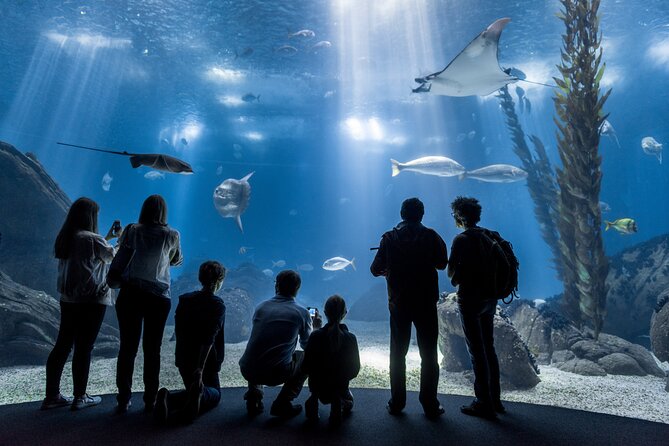
- Ocean scale you can feel: a huge central saltwater tank (about five million liters) with multiple viewing angles
- More than one “ocean”: four habitats represented on site, from North Atlantic to Tropical Indian Ocean
- Two-level walk-through: terrestrial and underwater viewing areas in one continuous route
- Ticket includes special exhibitions: Forests Underwater and Submerged Universe are part of admission
- Plan for a missing exhibit: Antarctic habitat is temporarily closed (penguins return in 2025)
- Make it a quick win: most visits land around 2 to 3 hours
Lisbon Oceanário ticket basics: what you’re really paying for
This admission is simple and practical. You pay $30.17 per person for entry to the aquarium plus two exhibitions: Forests Underwater by Takashi Amano and Submerged Universe. The whole outing usually takes 2 to 3 hours, which fits perfectly into a day of Lisbon sightseeing without eating your afternoon.
The biggest value move here is prebooking. With a mobile ticket (you show it at entry), you’re set up to use your time well. And because the Oceanário is one of the most prominent attractions in Lisbon’s waterfront area, having your admission locked in ahead of time reduces stress.
Also, you don’t have to worry about language too much. English is offered, and the site is designed for easy self-guided wandering once you’re inside.
Inside the main tank: five-million liters and four marine habitats
The core experience is the main saltwater aquarium: a central tank of about five million liters. What makes it feel special is the design. Instead of a single straight hallway of glass, you get a space where the central exhibit can be viewed from multiple sides and at different heights. Even if you arrive with only a general idea of what to see, the layout helps you “catch” the animals from more than one perspective.
Then the aquarium concept expands into four habitat zones. You’ll see the illusion of looking at one ocean made up of different regions, including habitats from the North Atlantic, Antarctic (temporarily closed), Temperate Pacific, and Tropical Indian Ocean. The point isn’t just variety for its own sake. It helps you understand that “ocean life” isn’t one look or one climate. You’re walking through different water worlds in one building.
You’ll also be moving between terrestrial and underwater viewing areas. That split matters. The terrestrial paths give you a sense of scale and layout, while the underwater views make it feel like you’re in the water column rather than just standing outside it.
A quick realism note
The Oceanário is big, but it’s not designed like a giant maze. If you want a smooth visit, follow the main flow and spend extra time at the central tank and the big-adjacent exhibits. Crowds can slow you down at popular windows, so building in a little flexibility helps.
Two-level route: how the building changes your view of the same animals
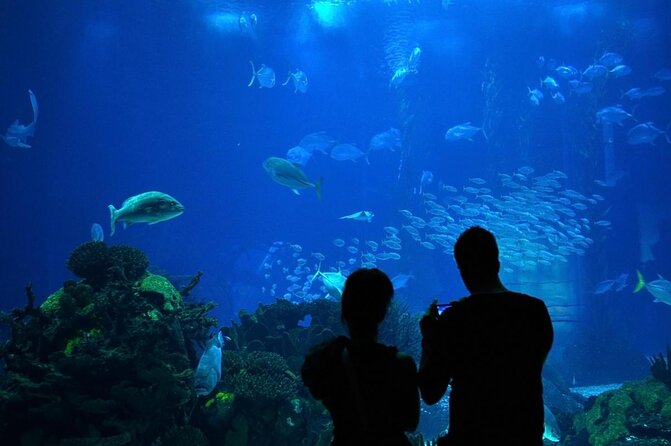
The two-level experience is more than a gimmick. It changes how your eyes work. From one floor, you tend to scan the tank like a mural. From the other, you notice different paths and behaviors because your angle to the water changes.
The route also crosses regions in a way that feels like an actual journey—temperate, tropical, and cold-water areas are grouped as part of one continuous concept. That’s a big reason the visit can work for both kids and adults: you’re not stuck in one “default aquarium mode.”
If you’re with kids, this is where the visit tends to click. A walk that includes both above-water and under-water views keeps attention from getting bored. If you’re an adult, it’s still satisfying because you can slow down and compare what you see at different levels.
Takashi Amano’s Forests Underwater and Submerged Universe add meaning
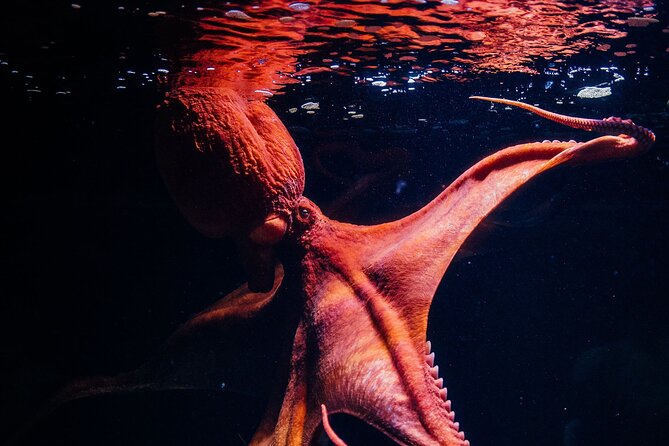
Animals are the headline, but the exhibitions are the supporting cast that makes the whole visit feel more thoughtful. The included stop Forests Underwater by Takashi Amano connects ocean life to nature and composition. You’re looking at tropical forests translated into an aquarium setting, and the effect is more about mood and pattern than just identification.
Then Submerged Universe pushes the experience toward immersion in the idea of ocean scale—an immersive ocean perspective designed to help you see beyond the glass in front of you. Even if you’re not the type who reads every information panel, these two exhibitions give you a chance to step back and get a different kind of understanding.
In practical terms, plan to spend at least 30–45 minutes on these exhibitions, even if your first instinct is to rush straight to the big tank. They’re part of what you paid for, and they break up the pacing so the day doesn’t turn into one long loop of viewing windows.
Parque das Nacoes waterfront: an easy start, a cool indoor break
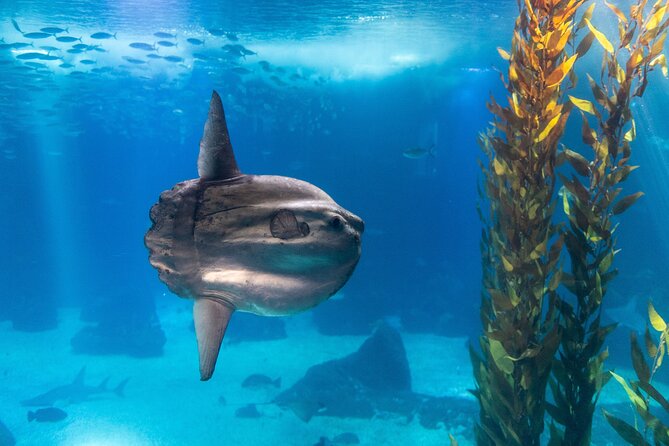
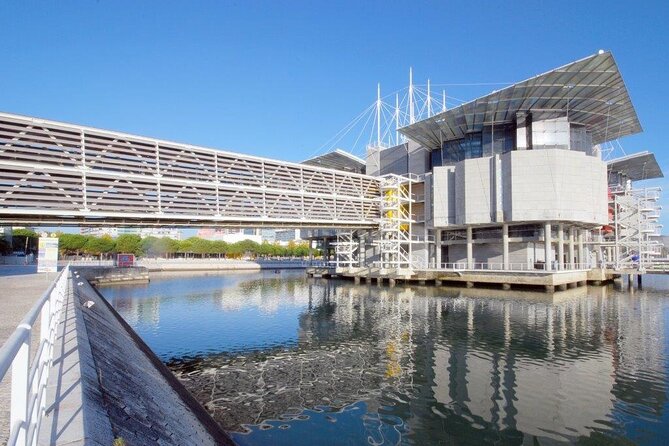
Location helps this place work as a half-day plan. The Oceanário is in Parque das Nacoes, and it’s on the waterfront with near public transportation, so you’re not stuck planning complicated logistics just to reach it.
It’s also a smart move on hot afternoons. The aquarium setting naturally cools you down, and multiple visitors highlight it as a great way to escape Lisbon’s heat while still doing something interesting indoors.
For timing, I’d think like this: if you want calmer viewing, go when opening is close. When you arrive later in the day, you should expect more people at the most popular windows. The central tank draws the strongest attention, so those are the spots where line-ups or slowdowns happen.
A simple strategy:
- Give yourself 2 hours minimum if you want the main tanks and exhibitions.
- Add another 30–60 minutes if you plan to linger around the central exhibit and the special displays.
What’s worth slowing down for: sea otters, central-tank viewing, and navigation cues

From what people consistently praise, a few moments are especially memorable. One standout is the sea otters. They’re active and easy to watch, and the layout tends to make them feel close enough that you can really focus on their behavior rather than only spotting them from a distance.
The central aquarium is another repeat favorite. People like it because it’s one tank, but it’s experienced from multiple angles. Instead of standing in one spot and waiting, you can move and keep discovering new views.
Also, the aquarium uses clear directional guidance. That sounds basic, but it matters. When arrows and layout cues are well done, you spend less time guessing and more time actually seeing the exhibits.
Antarctic habitat closure: how to adjust your expectations

Here’s the only major disappointment risk baked into this visit. The Antarctic habitat is temporarily closed, and the penguins are expected to return in 2025. So if penguin photos are your must-have, you’ll need to wait.
Still, don’t let that erase your plan. The rest of the aquarium remains the main event: the central tank, the other marine zones, and the included exhibitions. If anything, the closure might push you to look longer at the habitats that are operating right now and compare what you see across the other water regions.
If you want to be extra strategic, arrive ready to treat Antarctica as a bonus rather than a requirement. That mindset helps the visit stay enjoyable even if your ideal photo moment isn’t available.
Food, gift shops, and the practical reality of a 2–3 hour visit
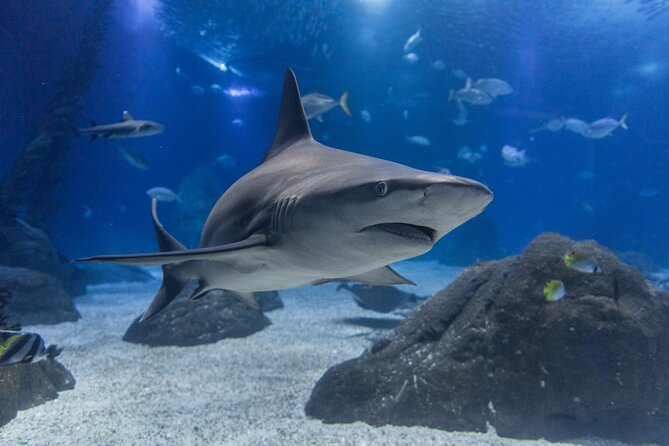
You’ll be able to buy food and drinks on site, but the cafeteria experience isn’t the strongest part of the day. A practical approach is to eat before you go or plan for something quick inside and save your real meal for after.
The site is designed for walking, so plan for some time on your feet. If you’re traveling with a stroller or you’re sensitive to crowding, be mindful that family groups make the indoor areas lively.
Gift shops are available, but you might find the selection more souvenir-focused than “collector-level” themed items. If you’re not into shopping, this is one less thing to worry about.
Value check: is $30.17 a good deal?
For an aquarium ticket, $30.17 can feel steep at first glance. But the price makes more sense when you consider what’s included: the aquarium admission plus both special exhibitions, Forests Underwater by Takashi Amano and Submerged Universe. That turns the ticket from a single-attraction admission into a “two-for-one” plus animal viewing.
It’s also good value when you’re trying to do something high-impact without committing to a full day. A typical 2 to 3 hour visit means you’re buying focused entertainment rather than a half-day you might regret.
Who this feels worth it for:
- Families with kids who need an indoor activity that can hold attention
- Adults who like science-y design and learning through visual exhibits
- Anyone who wants a major aquarium experience without complicated scheduling
Who might question the spend:
- People who only care about one species or one exhibit (especially since Antarctic/penguins are closed)
- Travelers who strongly dislike crowds and prefer quiet, small venues
Who should book this Lisbon Oceanário visit
I’d book it if you want a classic Lisbon rainy-day plan or a reliable indoor highlight. It’s also a smart choice if you want to anchor your day in one location. Parque das Nacoes is easy to build around, and the Oceanário gives you a clear, high-energy main attraction.
If you’re planning around jet lag or just want a break from walking, the indoor calm and lighting help. The aquarium is bright, easy to navigate, and designed to keep things moving.
Just go in with one expectation handled: don’t count on the Antarctic habitat for now. Everything else is still impressive enough to justify the visit.
Should you book? My honest decision guide
Yes, book this one if you want a big, well-designed aquarium experience with 8,000+ animals and you like the idea of adding museum-style exhibits to the same ticket. It’s also a strong pick if you’re visiting with kids, because the route and viewing angles give multiple “wow” moments without requiring a guided tour to understand what you’re looking at.
If you specifically came for the penguin viewing, you should decide based on timing and patience. Since the Antarctic habitat is closed until penguins return in 2025, you may prefer another plan until then.
If you’re on the fence, treat it like this: you’re buying time efficiency (prebooking + mobile entry) and a two-part experience (animals plus included art-style exhibits). That’s a solid value proposition for most Lisbon itineraries.
FAQ
How long does the Lisbon Oceanário visit take?
Most visits take about 2 to 3 hours, depending on how long you linger at the main tank and the included exhibitions.
What’s included with the ticket?
Your admission includes entry to the aquarium and access to the exhibitions Forests Underwater by Takashi Amano and Submerged Universe.
Where is the Oceanário de Lisboa located?
It’s in Lisbon, at Parque das Nacoes on the waterfront, and it’s near public transportation.
Does the ticket work on a phone?
Yes. The ticket is a mobile ticket, and you use it for entry.
Is the tour offered in English?
The experience is offered in English.
What animals and how many are there?
The aquarium features more than 8,000 animals and represents 500 different species.
Is the Antarctic habitat open?
No. The Antarctic habitat is temporarily closed, and the penguins are scheduled to return in 2025.
Are there food and drinks available?
Yes. Food and drinks are available for purchase inside the venue, but you should expect to handle meals like a standard attraction stop.
Can children go for free?
Children up to 2 years old have free admission, but they still require a ticket.
Can I cancel for a full refund?
Yes. Free cancellation is available if you cancel at least 24 hours in advance for a full refund. If you cancel less than 24 hours before, the amount is not refunded.