REVIEW · OKINAWA
Okinawa Churaumi or Tropical, Kouri American Village BusTour
Book on GetYourGuide →Operated by Cerulean Blue Okinawa · Bookable on GetYourGuide
A full day north of Naha, neatly packed. This Okinawa Churaumi or Tropical Dream Center bus tour is a smart way to see big-name sights without renting a car, and I especially like the payoff of the Kouri Bridge views plus the option to choose your main stop. You’ll get either the Churaumi Aquarium tanks or the orchid-filled Tropical Dream Center, and you’ll still have time for photo stops, snacks, and sunset time. One thing to weigh: the day is tight, so if you like long hangs in each place, you may feel the clock.
I also like how the tour runs on a smart audio guide tied to GPS. No live narration means you’re in control of pace and you won’t need to hunt for a guide in a crowd. Still, it’s not the best fit if you want lots of spontaneous Q&A, and you’ll want to keep your phone charged since the guide depends on it.
In This Review
- Key things I’d zero in on
- The value of a $45 day: what you really get
- Finding the Cerulean Blue bus without stress
- Ocean Expo Park: where your main time (and lunch) happens
- Option A: Churaumi Aquarium (included if you chose it)
- Option B: Tropical Dream Centre (included if you chose it)
- A key Okinawa tip
- Kouri Island and Kouri Bridge: your emerald-sea photo hit
- Okashigoten: Beniimo tarts and quick souvenir strategy
- Cape Manzamo: elephant-shaped rock and the 100 JPY fee
- American Village and Sunset Beach: shopping that also serves a purpose
- Audio guide GPS: great context, but plan for your phone
- Bus comforts and real-day tips that matter
- Who this tour fits best (and who should skip it)
- Should you book it?
- FAQ
- Which main attraction do I choose: Churaumi Aquarium or Tropical Dream Center?
- Where can I board the bus in Okinawa?
- What time does the tour start from each pick-up location?
- Does the price include lunch?
- Is there an entry fee for Manza Cape?
- How long are the Kouri Island and American Village stops?
- Do I need my smartphone for the audio guide?
- Is there a live guide on the bus?
- Can I store luggage on the bus?
Key things I’d zero in on
- Choose your anchor stop: Churaumi Aquarium or Tropical Dream Center, but not both
- Kouri Bridge is the star photo: a 2 km crossing over emerald-blue water
- Ocean Expo Park gives you time for lunch while you do the main attraction
- Manza Cape has a cash eco-fee: 100 JPY for environmental protection
- American Village is the practical finale with shopping and Sunset Beach
- A real name pops up: one recent guide you might hear on the bus is called Go
The value of a $45 day: what you really get
At around $45 per person for a 630-minute (10.5-hour) loop, the value is mostly about transportation and structure. This itinerary strings together far-flung north Okinawa sights—things that are awkward to chain by bus on your own—then adds a GPS audio guide so you get context during the drive.
Your “payment” is your time. You’re paying to visit a lot of places in one shot, not to linger. Think of it as an efficient sampler platter: enough time to enjoy each highlight, plus a few short stops for those classic Okinawa photo angles.
If you’re staying only a day or two on the island, this kind of tour makes sense because you avoid the planning headache. But if you’re the type who wants to spend hours at one beach, one market, or one museum, you’ll likely want a slower plan with fewer stops and more free wandering.
Finding the Cerulean Blue bus without stress
Pick-up is built around three convenient starting points, and that matters on Okinawa where getting across town can take time.
You can board at:
- In front of the Okinawa Prefectural Assembly area in Naha (Palette Kumoji, across from Nippon Rent-A-Car), with meeting at 08:35 and departure at 08:45
- Next to DFS Galleria Omoromachi in Naha (meeting 09:05, departure 09:15)
- Chatan Tourist Information Center (meeting 09:45, departure 09:55)
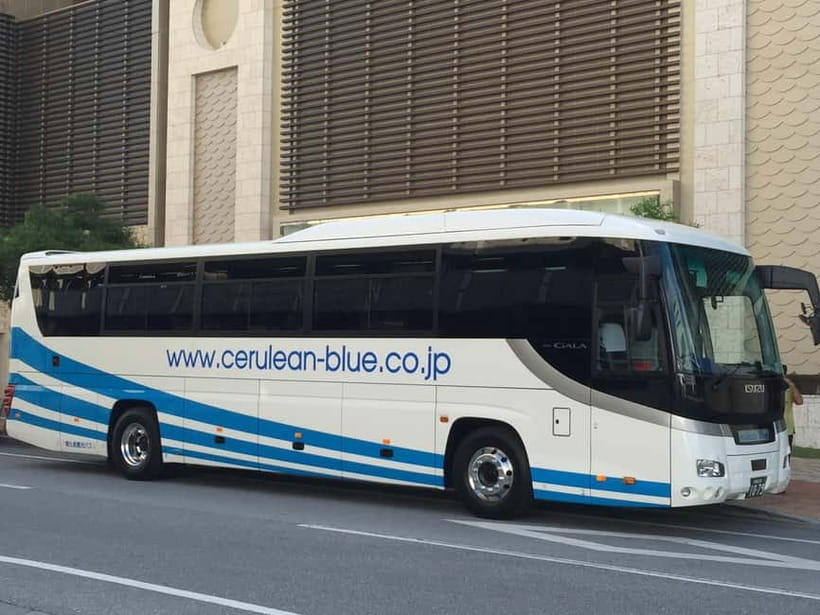
There’s a practical trick: there’s no specific bus stop sign. You’re looking for a bus marked Cerulean Blue on the side, and you may see a big Iyas logo on rare days. The front windshield also shows a “C.D” sign.
Also plan around how the day flows: the “official” start time is when the bus leaves the first pick-up point, then it hits the other stops. If you’re late, you can miss your timing for later events after the tour.
Ocean Expo Park: where your main time (and lunch) happens
The day starts with a long chunk at Ocean Expo Park—about 150 minutes—so you’re not stuck racing through the aquarium area. This is useful because lunch isn’t included, and the itinerary expects you to eat during free time around the main stop.
From there, your route splits:
Option A: Churaumi Aquarium (included if you chose it)
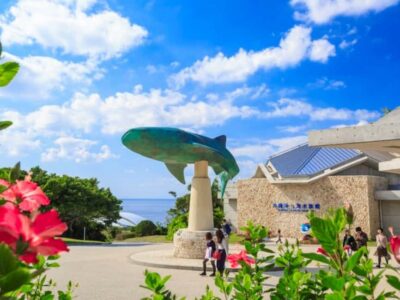
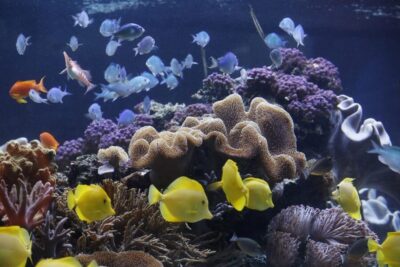
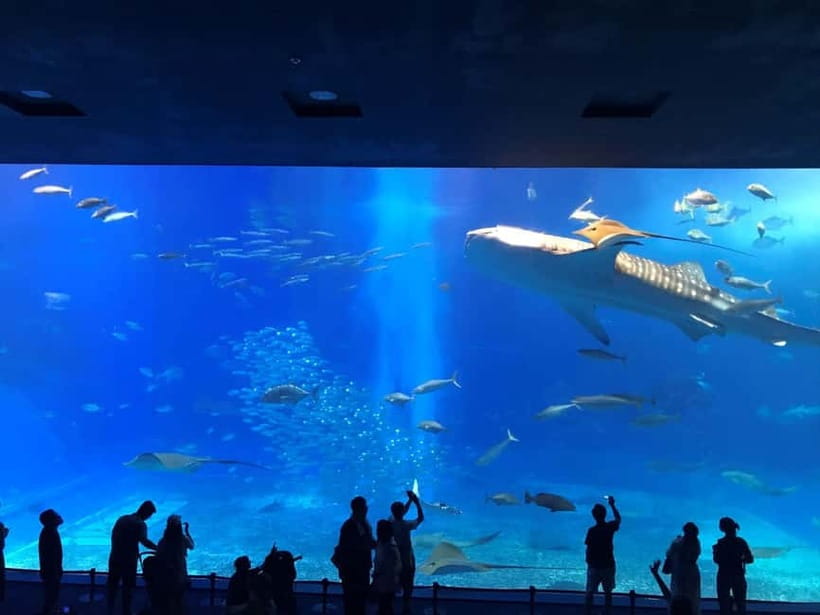
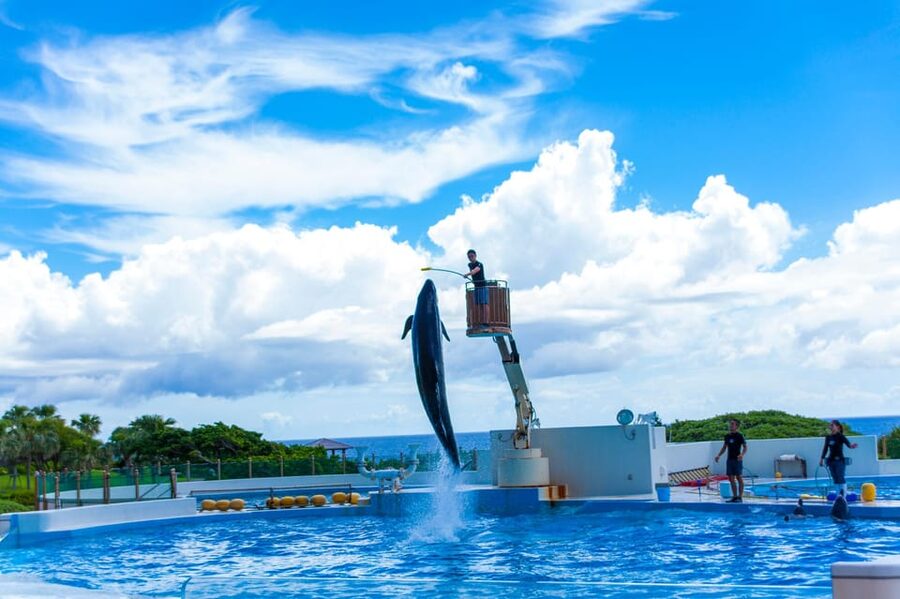
You’ll spend about 2.5 hours at Okinawa Churaumi Aquarium. The attraction is built around massive tanks and deep-sea animals—think sharks, coral, and tropical fish. It’s a great fit if you love animals and want a clear “wow” payoff in a timed visit.
One real-world note: a recent booking mentioned the bus was parked a bit far from the aquarium entrance. That’s not a deal-breaker, but wear comfortable shoes and don’t assume it’s a drop-off right at the door.
Option B: Tropical Dream Centre (included if you chose it)
If you prefer a more garden-and-photo vibe, the Tropical Dream Center option also gets about 2.5 hours. You’ll walk through three greenhouses featuring 2,000+ orchids. It’s the kind of stop that works well when you want something calmer than animal exhibits.
A key Okinawa tip
Either way, bring sunscreen and a hat. Even if you’re mostly indoors at the aquarium/greenhouse, the surrounding Ocean Expo Park time includes plenty of outdoor walking.
Kouri Island and Kouri Bridge: your emerald-sea photo hit
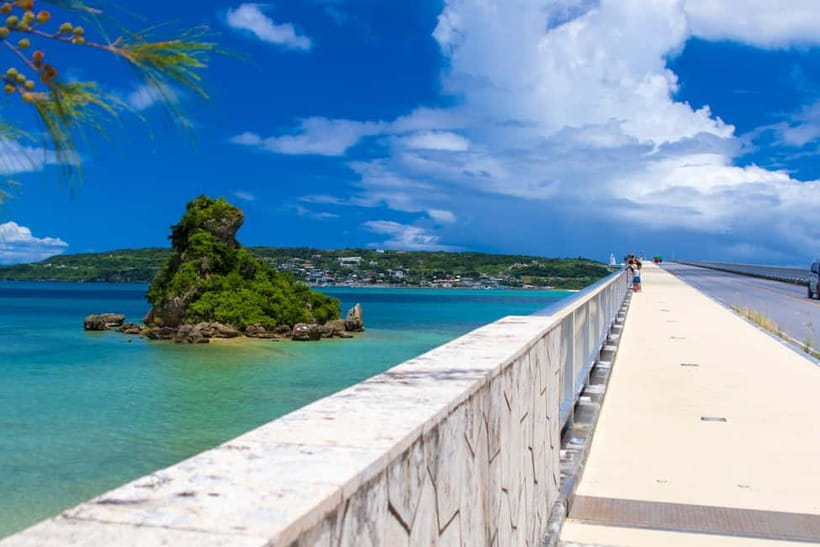
After the main attraction, you’ll head toward Kouri Beach for about 20 minutes. This is short, so treat it like a scenic reset: quick photos, a stretch, and a chance to feel the island air.
Then the highlight: crossing the Kouri Bridge. It’s about 2 km long, and it’s famous for spanning beautiful emerald-blue water. The tour even positions the bridge as one of the longer crossings in Okinawa, which is why the photo moments matter—this is a “look out the window” stretch, not a quick sidewalk stop.
You’ll also have a chance to browse the tropical fruit market during this zone. It’s a nice opportunity for small snack buys or souvenirs without turning it into a full shopping session.
If you’re sensitive to time pressure, this section can feel fast—but it delivers exactly what most people want from a bus day: postcard views with just enough breathing room to enjoy them.
Okashigoten: Beniimo tarts and quick souvenir strategy
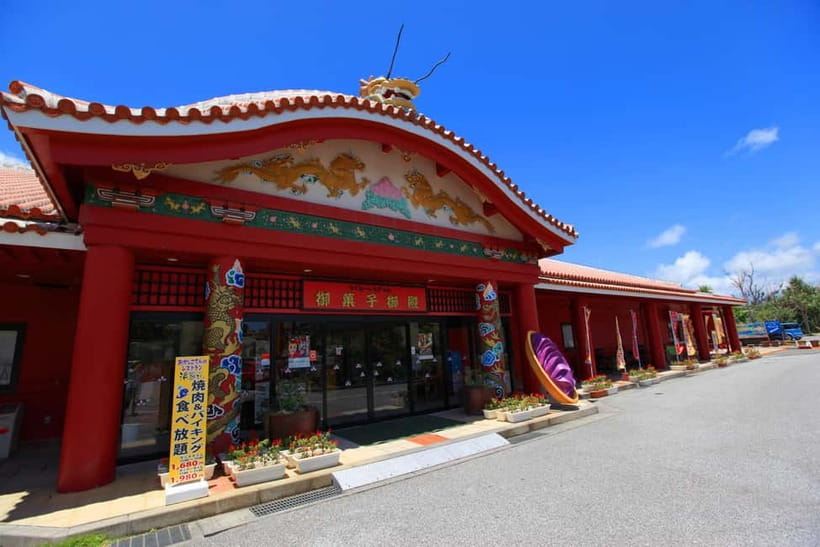
Next comes Okashigoten for about 20 minutes. This stop is designed for grabbing sweets without a long detour. It’s especially known for Beniimo tarts, which is handy if you want a gift that feels Okinawan rather than generic.
In practical terms, this is where you do your “everyone gets something” shopping. The stop is short, so you’ll want to move with purpose:
- decide what you want before you get inside
- check any line/time pressure quickly
- remember you may be walking with treats while also fitting photos elsewhere
If you like to browse, you’ll still be able to take in the vibe, but this is not a slow market wandering stop.
Cape Manzamo: elephant-shaped rock and the 100 JPY fee
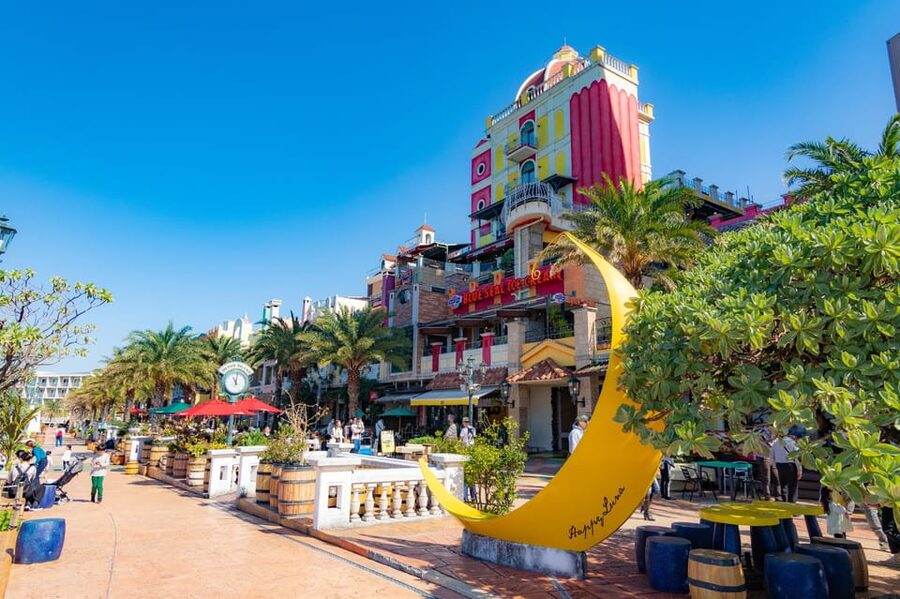
Cape Manzamo is one of Okinawa’s iconic cliff-and-rock scenes, and you’ll get about 20 minutes here, mostly for photos and a quick scenic walk.
The famous feature is the elephant-shaped rock formation. It’s the kind of landmark that works because it’s instantly recognizable, even if you only have a few minutes.
There’s also an entry-style environmental protection fee of 100 JPY collected onsite in cash. This isn’t a huge number, but it’s a reminder to keep some cash accessible for small Okinawa fees. The tour schedule gives you time to do that without turning the stop into a scramble.
A small optional perk: you can also grab Okinawan donuts during this time. It’s a fun match to the cliff scenery—sweet snack while you watch the wind and waves.
American Village and Sunset Beach: shopping that also serves a purpose
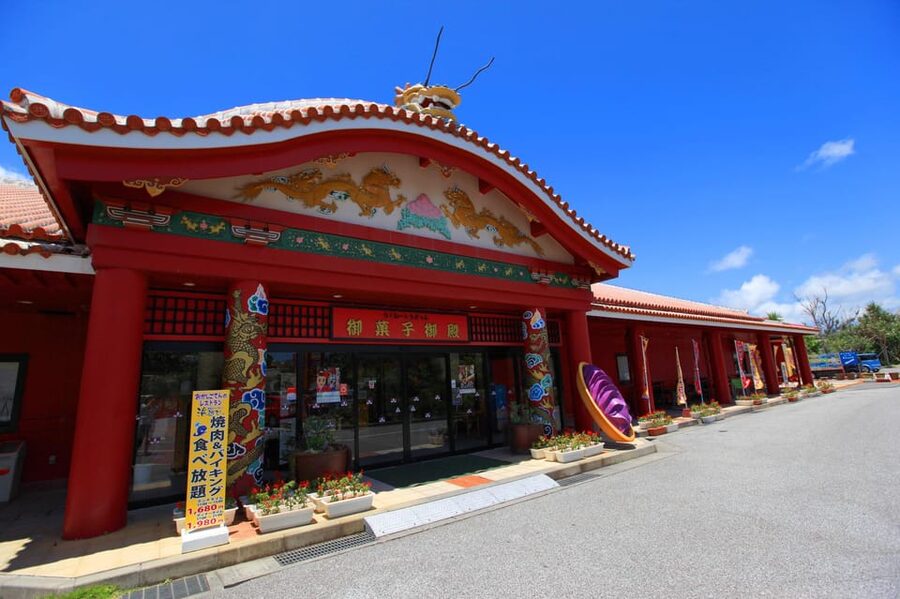
The final “free to enjoy” zone is American Village, about 50 minutes. It’s lively with fashion shops and casual food spots (burgers and hot dogs are specifically mentioned), and it ends with a built-in sunset setting at Sunset Beach.
This is a smart way to end a long day: you get something to do even if you don’t want another big attraction. You can also choose to end the tour here, depending on your preference.
In terms of mindset, I’d treat this part as flexible time. If your legs are tired from long walks at aquarium/greenhouses, use it for:
- light browsing
- a sit-down bite
- a slow walk near the beach for the sunset moment
If you need a photo with the ocean and you don’t want to fight crowds later, this timing is a decent compromise.
Audio guide GPS: great context, but plan for your phone
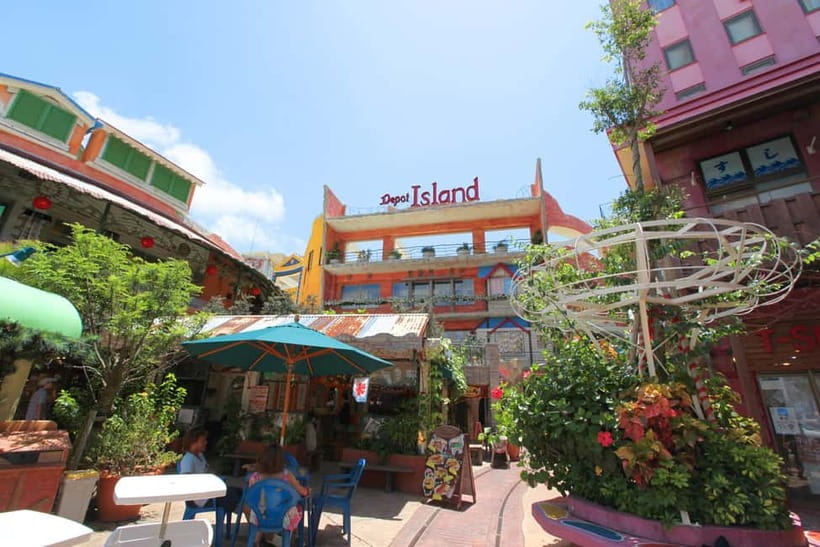
The tour includes smart audio guidance in multiple languages on your smartphone, including English, Japanese, Korean, French, Spanish, and Chinese variants. The big requirement: GPS needs to work, and you’ll need a phone with battery you can trust.
Important expectation: there are no bus guides. It runs on the audio device and GPS triggers, and the bus attendant may not speak your preferred language. If something goes wrong, the operator’s office staff can assist in English, Japanese, Korean, and Chinese, but it’s still a different experience than having a live guide.
Here’s what I’d do to make this smoother:
- bring earphones
- charge your phone beforehand (and consider a small power bank)
- download nothing special ahead of time is required by the provided info, but you should have reliable GPS
One review highlighted that the driver and audio setup kept the day moving and that the audio content was interesting during the drive. That’s the real point of this format: you get context while you travel, not after you arrive.
Bus comforts and real-day tips that matter
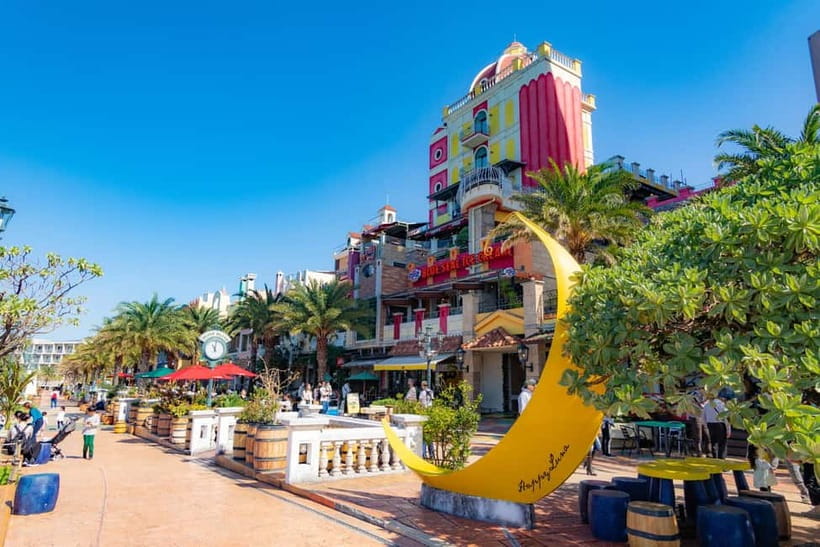
This is a coach-style bus with air conditioning and plenty of leg room, and that comfort matters because you’re on the road for a long time. One recent comment also noted the bus had WiFi and phone chargers upon request, which is useful if your battery tends to die early.
The day also tolerates being “slightly flexible.” Traffic can shift timing, and the finish time may vary. If you’re trying to catch a flight the same day, plan buffer time—at least two hours before departure is specifically recommended.
One more practical tip: luggage can be stored in the bus trunk. This helps if you’re hopping between hotels in Naha and Chatan and don’t want to haul bags through multiple areas on foot.
And of course, follow the basics:
- no smoking in the vehicle
- no food or alcohol on the bus
Who this tour fits best (and who should skip it)
This tour is best for you if:
- you want an efficient overview of north Okinawa in one day
- you’d rather spend money on a tour than time figuring out connections
- you like guided context, but you’re okay using audio instead of a live speaker
- you can handle shorter stop times and don’t need to linger
It’s less ideal if:
- you want lots of deep, slow exploration at one site
- you strongly prefer a live guide who can answer questions on the spot
- you plan to move from stop to stop without the ability to walk a bit
Also, note the tradeoff: you can choose Churaumi Aquarium or Tropical Dream Center, but there’s no option that includes both entrance fees. If both are must-dos for you, you’ll need another plan.
Should you book it?
If you’re doing Okinawa for a short trip and you want the “greatest hits” route—aquarium or orchids, Kouri Bridge views, Manzamo cliffs, and American Village sunset—this one is a solid buy for the money. The structure is clear, the timing is efficient, and the audio guide does the heavy lifting of explaining what you’re seeing while you ride.
I’d book it if you’re the type who likes to check off key sights and then spend your remaining time on the island doing slower, personal explorations on your own terms.
Skip it if your ideal day is slow and detailed, because this plan is built to move. In Okinawa, that’s either perfect—or it’s a bit too much schedule.
FAQ
Which main attraction do I choose: Churaumi Aquarium or Tropical Dream Center?
You pick one option. If you choose Churaumi Aquarium, the entrance fee is included. If you choose Tropical Dream Center, its entrance fee is included. There is no option that includes entrance fees for both.
Where can I board the bus in Okinawa?
You can board at three pick-up points: in front of the Okinawa Prefectural Assembly area (Palette Kumoji) in Naha, next to DFS Galleria Omoromachi in Naha, or at Chatan Tourist Information Center in Chatan.
What time does the tour start from each pick-up location?
Reference start times are tied to bus departure. From Palette Kumoji the bus departs 08:45. From DFS Galleria Omoromachi it departs 09:15. From Chatan Tourist Information Center it departs 09:55.
Does the price include lunch?
No. Lunch isn’t included. The plan expects you to have lunch during the free time near Ocean Expo Park.
Is there an entry fee for Manza Cape?
Yes. An environmental protection fee of 100 JPY is collected onsite in cash at Manza Cape.
How long are the Kouri Island and American Village stops?
Kouri Beach and the nearby fruit market/bridge area are about 20 minutes. American Village is about 50 minutes, including time to enjoy Sunset Beach.
Do I need my smartphone for the audio guide?
Yes. The smart audio guidance runs on your smartphone using GPS. You should have working GPS and enough battery. There is no refund if the service doesn’t work.
Is there a live guide on the bus?
No. There are no bus guides for this tour. Audio guidance provides the explanation, and any attendant help may depend on language availability.
Can I store luggage on the bus?
Yes. Luggage can be stored in the bus trunk, which is especially helpful if you’re changing hotels between Naha and Chatan.