REVIEW · SEVILLE
Seville Aquarium Admission Ticket
Book on GetYourGuide →Operated by Acuario de Sevilla · Bookable on GetYourGuide
Seville has the only sea in the city. The Magellan circumnavigation route turns the aquarium into a story walk, with you moving through themed “oceans” that connect to the first trip around the globe. I love the 9-meter-deep shark tank and the fact you can actually walk near the seabed under it, and I also like how the axolotl installation makes conservation feel personal. One thing to consider: the aquarium can feel on the smaller side if you’re expecting a huge multi-building mega complex, so plan for about a 90-minute visit.
If you’re in Seville with kids, on a rainy day, or just craving air-conditioned calm, this is a solid use of time. You’ll see more than 7,000 animals across around 400 species, and the route is easy to follow. The downside is that it’s not a guided show—you’re on your own for the pacing—so if you want a staff-led tour, you’ll need to bring your curiosity.
In This Review
- Key highlights at a glance
- Why Seville’s aquarium is themed like a world expedition
- What a 90-minute visit really feels like
- The five themed zones: five names, one continuous walking route
- Guadalquivir
- Atlantic
- Amazon
- Pacific
- Indo-Pacific
- The 9-meter shark tank walk-under: the moment most people remember
- Axolotls in Seville: regeneration plus a conservation message
- Jellyfish and the “wait for it” displays
- Food, coffee, and the gift shop break you might actually want
- Getting there: bike lanes, buses, metro, and an underground car park
- Price and value: does $20 make sense for what you get?
- Who should book this ticket (and who should skip it)
- Should you book the Seville Aquarium admission ticket?
- FAQ
- How much is the Seville Aquarium admission ticket?
- How long should I plan to visit?
- What’s included with the ticket?
- What time should I arrive if the aquarium is closing soon?
- Are the exhibits wheelchair accessible?
- Is there an axolotl exhibit?
Key highlights at a glance
- Magellan’s journey theme links each zone to the first circumnavigation story.
- A walk-under shark experience at 9 meters deep with turtles and shark species.
- Five themed areas: Guadalquivir, Atlantic, Amazon, Pacific, and Indo-Pacific.
- Axolotls at the center of a regeneration-and-conservation display.
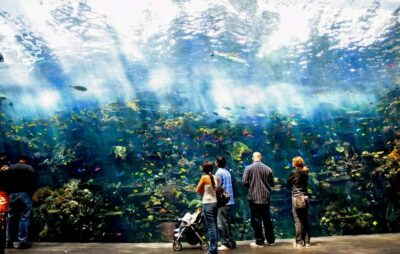
- One big viewing tank layout with windows and platforms that keep you scanning for movement.
Why Seville’s aquarium is themed like a world expedition
Most aquariums feel like a collection of tanks. This one is built like a route, inspired by Magellan’s voyage—then linked to the broader circumnavigation of the planet. That design choice matters because it changes how you walk. Instead of a loop of random displays, you follow a path that’s meant to feel logical and historical, with each themed area acting like a stop on the journey.
Inside, you move through five areas: Guadalquivir, Atlantic, Amazon, Pacific, and Indo-Pacific. The names are simple, but they help you mentally sort what you’re seeing. I like that the aquarium doesn’t ask you to be an oceanographer to enjoy it. You can just enjoy the scenery, then read the signs when you want the details.
The aquarium also leans into the “real-world” connection. You’re not only looking at fish in general; you’re seeing animals that are presented as part of the marine world tied to that expedition theme. That storytelling angle is the main reason I think the Seville Aquarium is worth your time even if you’ve been to other aquariums in Europe.
What a 90-minute visit really feels like
The admission is a straightforward ticket. There’s no included guide, and the visit is designed to take about 90 minutes. In practice, you’ll likely be between roughly 75 minutes and 90 minutes if you keep moving, and closer to 1.5 hours if you slow down for the big tank and the cooler corners.
The layout is built for flow. You don’t constantly backtrack, and the main attractions are placed where you naturally pause. Several people found the pacing easy, and that matches the feel I get from the design: it’s not a sprint, but it’s also not a half-day commitment.
A practical tip: start with the biggest tank early. The reason is simple—later, you’ll spend more time refilling attention while your feet cool down. If you begin by focusing on the largest displays first, you end with the smaller exhibits (like jellyfish and the rainforest-style areas) with fresh eyes.
Also note one small logistics detail that can affect your timing: the ticket office closes 1 hour before the aquarium closes. If you’re arriving late in the day, that cut-off can matter more than you’d expect, especially if you’re combining the aquarium with a neighborhood walk.
The five themed zones: five names, one continuous walking route
The themed areas are the backbone of the route. Here’s how to think about them as you walk.
Guadalquivir
This zone anchors the experience in the idea of a local river connection. Even if you don’t know much about the Guadalquivir beyond Seville’s geography, you’ll get a sense of “home water” as you start your journey. It’s a good warm-up zone because it helps you shift from city mode to aquarium mode.
Atlantic
As you move into the Atlantic-themed space, you’ll generally get a shift in the feel of the displays. The aquarium uses design and signage to separate each stop, which makes it easier to remember what you saw when your brain is already juggling tapas and museum plans.
Amazon
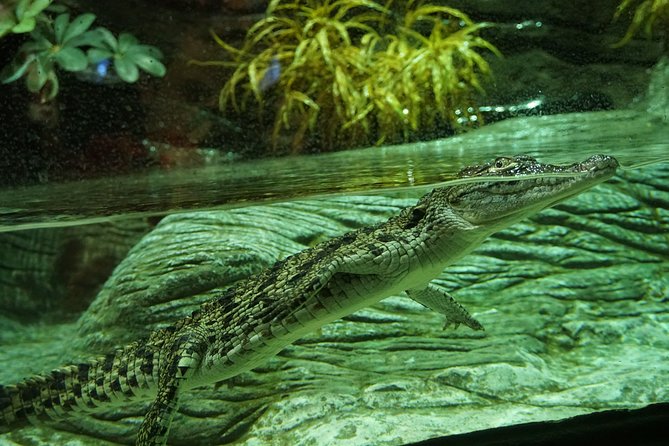
The Amazon theme is where you’re more likely to feel the aquarium isn’t only about fish. The displays include animals beyond typical “seaweed-and-sardines” expectations, and at least some of the rainforest-related rooms are designed to keep kids curious without needing complex explanations.
Pacific
By the time you reach the Pacific section, you’ll probably have discovered your favorite viewing patterns—some tanks invite standing and staring, while others reward a slower walk past the same window multiple times as animals move.
Indo-Pacific
This final themed section helps wrap the journey feeling like a complete loop. I like that it works well even if you’re not a long-reader. You can still enjoy the visuals and then catch the explanation when you pause.
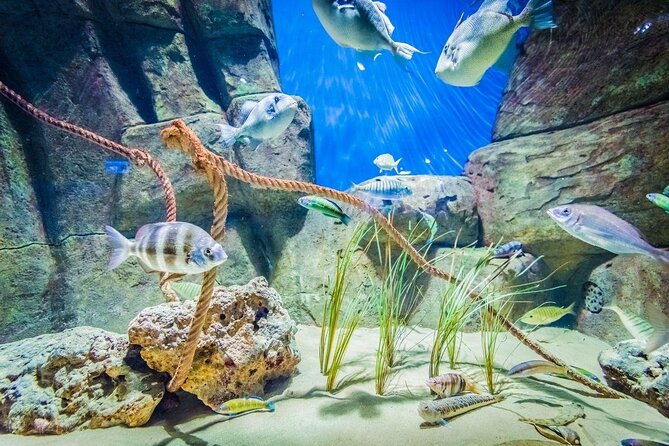
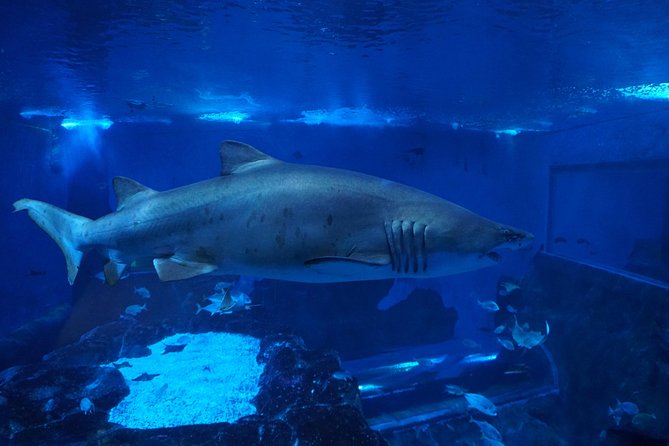
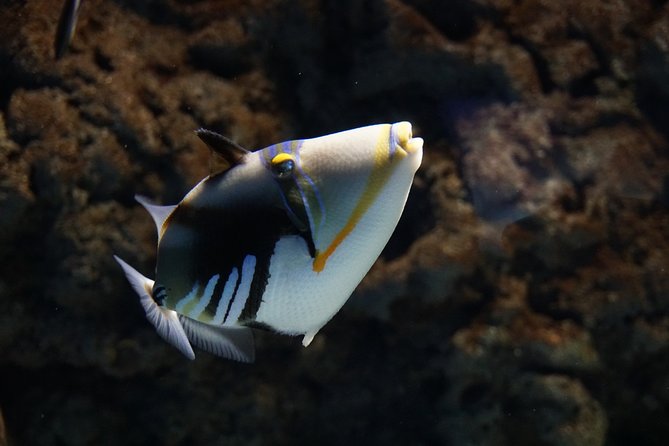
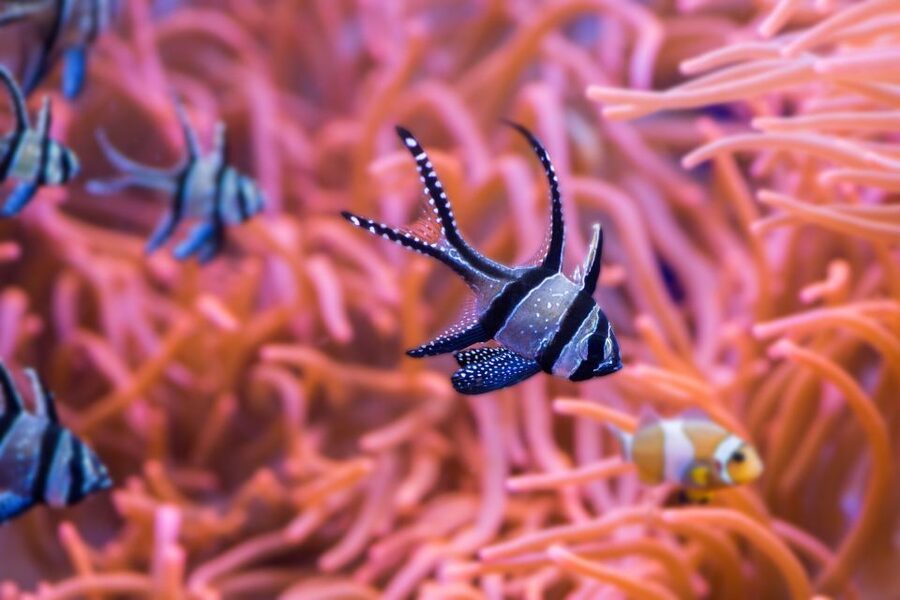
Across the route, you’ll see a strong variety of marine and aquatic creatures, including sea turtles, rays, seahorses, jellyfish, octopus, plus other species visitors often mention. The exact mix you’ll see on a given day can vary, but the aquarium’s identity is consistently “lots of different kinds of animals” rather than repeating the same format everywhere.
The 9-meter shark tank walk-under: the moment most people remember
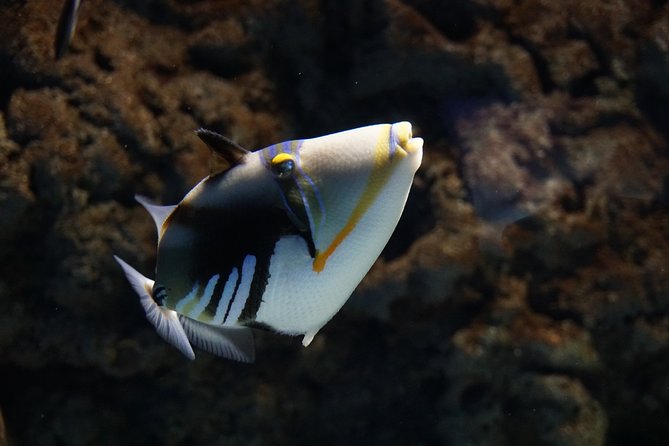
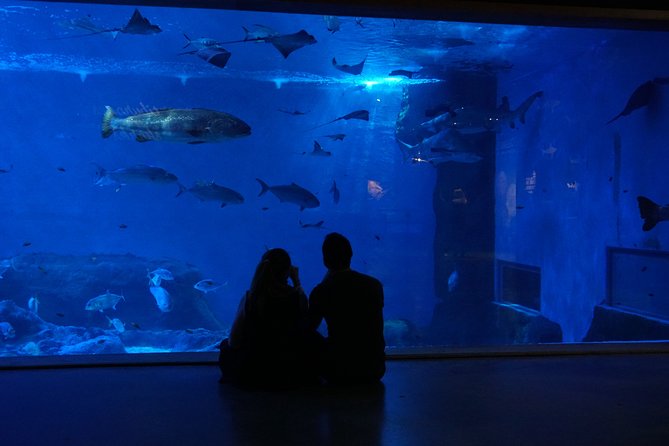
If you only care about one thing, make it the deepest shark-tank experience at 9 meters deep. This is the signature attraction, and it’s not just a single glass window you glance at. The aquarium lets you get closer to the action by letting you pass beneath the tank area.
That walking-under detail changes the feeling. Looking at sharks from the side window is one thing. Walking under a deep tank while you scan upward for movement gives you a more physical sense of depth, like the water is overhead. For many visitors, this is the highlight because it feels memorable and a bit cinematic without needing any show effects.
You’ll also see iconic companions in this big-tank world—sea turtles are specifically mentioned along with different shark species. If you’re the kind of person who enjoys watching animals more than reading displays, this tank is your time investment.
Practical advice: bring your patience for the big moments. Some tanks are active and some are quieter. When sharks aren’t cruising, don’t panic—stand, adjust your angle, and check a few nearby windows rather than assuming nothing is happening.
Axolotls in Seville: regeneration plus a conservation message
Not every aquarium has an axolotl installation that feels like a real focus. Here, you’ll find a display built around this amphibian and its famous ability to regenerate body parts.
The axolotl info is striking: it can regenerate limbs, organs, and part of its brain. The aquarium presents it in a way that feels both educational and emotional, which is exactly what you want from a conservation-themed exhibit. It also matters that the aquarium calls the species critically endangered.
This is where the aquarium shifts from entertainment to responsibility, in a way that still works for families. You’re not just looking at an unusual animal—you’re also being prompted to think about what conservation means, and how your choices can support it. Even if you don’t leave knowing a single scientific term, you’ll leave with a stronger mental image of why the animal needs protection.
If you’re visiting with kids, this is often the kind of exhibit that holds attention because it’s weird in the best way. Adults like it too, especially if you’ve ever seen axolotls online and wondered what the regeneration story really means.
Jellyfish and the “wait for it” displays
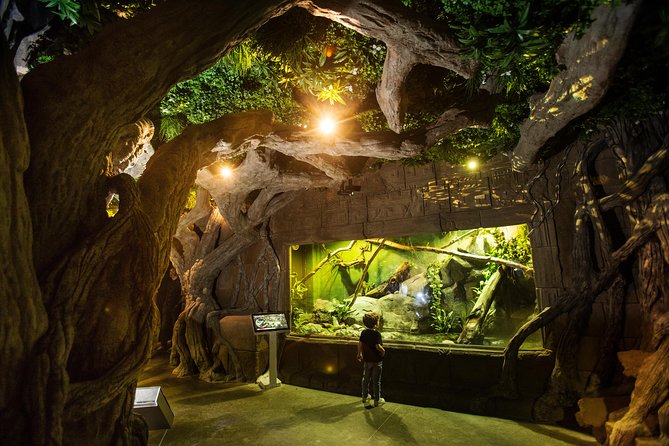
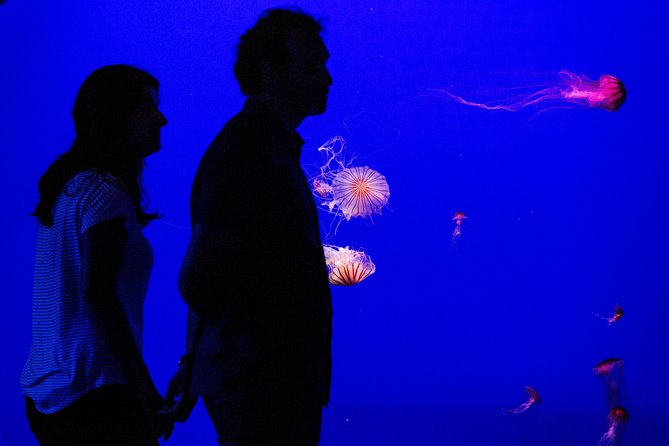
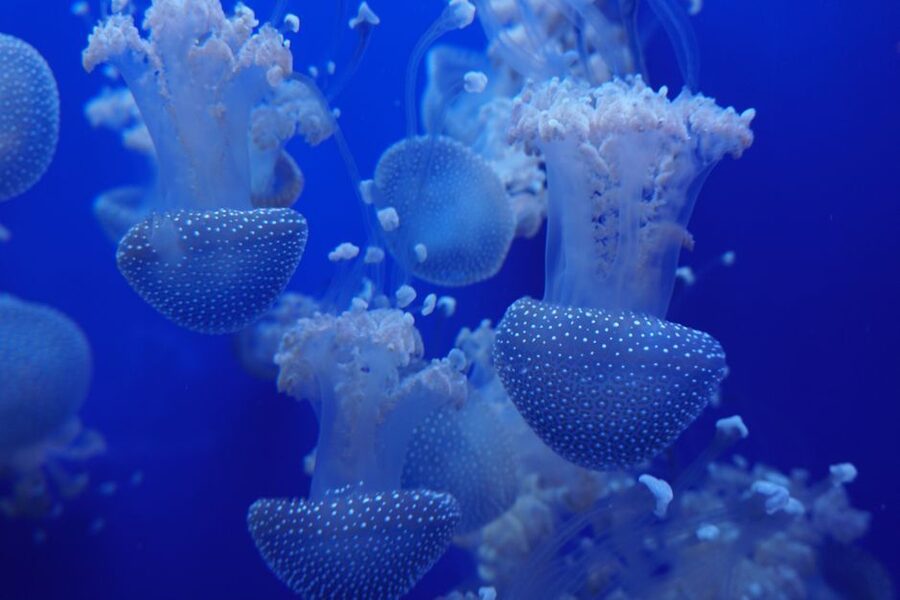
Beyond the big shark tank, several visitors highlight how much they enjoyed the calmer, more delicate exhibits. The jellyfish area is one of the most frequently mentioned favorites, and it’s easy to see why: the display style encourages you to slow down and let your eyes follow the movement rather than chase it.
Other animals people commonly point out include rays, seahorses, piranhas, octopus, and even a broader mix like frogs and snakes. That mix supports a useful strategy for your visit: don’t only hunt for the headline species. You can have a better overall experience by giving yourself time for the quieter tanks where animals might be less obvious but still fascinating.
And yes, there’s a lot of signage. Many reviews specifically note information in both English and Spanish, which makes a difference if you don’t want to stare at labels anyway. You can skim, stand back, then return to a tank when something catches your eye.
Food, coffee, and the gift shop break you might actually want
The aquarium has you covered for small stops. You can grab coffee, soft drinks, or snacks, and there’s a shop where you can pick up souvenirs.
A few realistic notes so you’re not surprised:
- The shop is small, but it sells items worth browsing if you want a reminder.
- One review notes there were only coffee/tea machines, and that a proper café would be nicer for older visitors.
- Another comment says the restaurant was closed and suggests some food/shopping options can feel limited.
So treat the food plan as flexible. If you want a full meal, don’t assume the aquarium is a restaurant destination. Think of it as a quick fuel stop, then head back out to Seville for the real dining.
If you’re visiting during a hot afternoon, the indoor cooldown is part of the value. Several people specifically recommended it as a way to escape heat and rain. Even if you’re not a museum person, an hour in controlled climate can be a gift.
Getting there: bike lanes, buses, metro, and an underground car park
Location matters with day plans, and Seville Aquarium is set up for multiple transport styles.
- By bike: It’s well connected via bike lanes, and there’s a bike rack at the entrance.
- By bus: Tussam lines 3, 6, and 34 stop at La Palmera.
- By underground/metro: The nearest metro stop is Puerta Jerez, about a 15-minute walk away.
- By car: There’s a public underground car park next to the aquarium. Enter from Av. Molini.
If you’re staying central, Puerta Jerez is usually the easiest anchor. If you’re already on the river side, you can often build it into a walk day, too. Either way, don’t plan on a car-first route unless you’re comfortable with the parking situation.
Price and value: does $20 make sense for what you get?
The ticket price is about $20 per person, and the value comes down to what you want from the outing.
Here’s what you’re getting for your money:
- Admission to the aquarium (no guide is included).
- A long-enough circuit: about 90 minutes.
- More than 7,000 animals across around 400 species.
- The signature feature: the walk-under shark tank at 9 meters.
- A conservation-focused exhibit via the axolotl installation.
If you’re an aquarium person, or you’re traveling with kids, the value tends to feel good because there’s enough variety to keep attention. Multiple reviews describe it as a worthwhile stop for families and for rainy days, and that matches how I’d frame it: you’re buying time that feels “worth it” rather than a quick peek.
If you’re expecting the largest aquarium you’ve ever seen, you might find it feels smaller than some other European options. One review also suggests the aquarium can feel underutilized. That doesn’t change what’s inside, but it can affect your sense of scale.
My honest take: at $20, it’s a good value when you treat it as a high-quality indoor circuit with a real centerpiece. It’s not the kind of ticket I’d buy if you only have 30 minutes or if you’re strictly seeking a major, multi-hour highlight like a world-class museum.
Who should book this ticket (and who should skip it)
This is a great match for:
- Families with kids who need something calm and indoor with plenty to look at.
- Animal lovers who like tank layouts and watching movement over time.
- People traveling on a rainy day or during a heat wave.
- Travelers who want an easy half-day activity without booking a full tour package.
You might skip it if:
- You already did a big, multi-building aquarium experience elsewhere and feel a smaller venue won’t satisfy.
- You strongly prefer guided explanations and structured storytelling led by a person. Here, the story is mostly self-guided through the themed route.
Also, if you love photographing animals, come with realistic expectations. The main tank offers big viewing angles, but quiet animals won’t pose on schedule. The best strategy is to move slowly and wait for moments, not sprint for perfect shots.
Should you book the Seville Aquarium admission ticket?
Yes, I’d book it if you want an easy, climate-friendly Seville activity with a strong centerpiece and real variety. The Magellan-themed route makes it feel more than just another tank gallery, and the 9-meter shark tank walk-under is the kind of experience you remember on the flight home. Add in the axolotl focus, and you get a rare mix of fun plus a conservation message that doesn’t feel preachy.
But book with the right mindset. Plan for around 90 minutes, not half a day. Go in expecting a self-guided walk through five themed zones, not a guided program or a giant sprawling complex. If that fits your travel style, this is a solid $20 use of your time in Seville.
FAQ
How much is the Seville Aquarium admission ticket?
The Seville Aquarium admission ticket is listed at about $20 per person.
How long should I plan to visit?
Plan for about 90 minutes. Many people end up around 75 to 90 minutes if they keep moving.
What’s included with the ticket?
Your ticket includes admission to the Seville Aquarium. Extra activities and a guide are not included.
What time should I arrive if the aquarium is closing soon?
The ticket office closes 1 hour before the aquarium closes, so try to arrive with enough time to buy or validate your ticket comfortably.
Are the exhibits wheelchair accessible?
Yes, the aquarium is listed as wheelchair accessible.
Is there an axolotl exhibit?
Yes. There is a new axolotl installation, and the aquarium highlights its regeneration ability along with the fact that it is critically endangered.